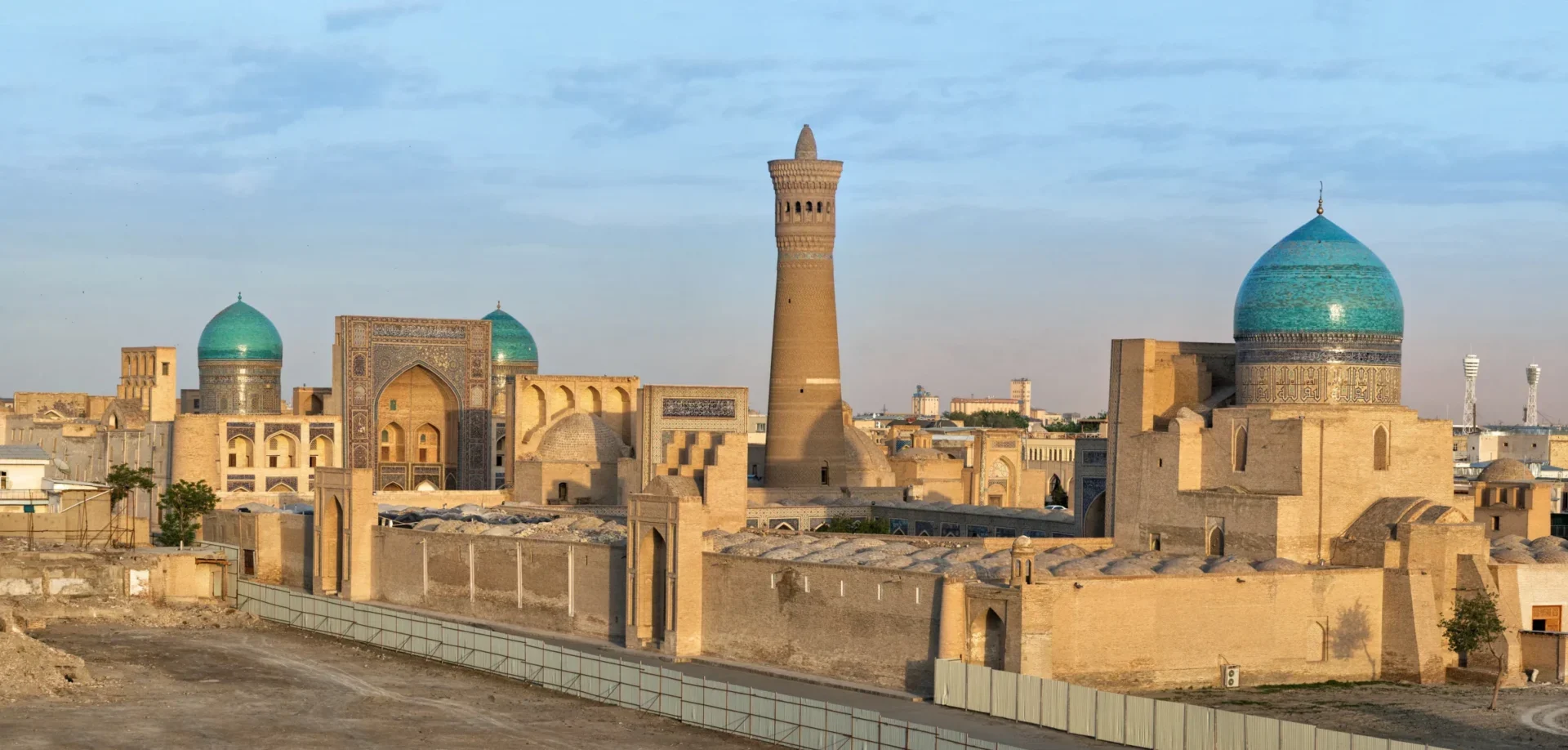
Bukhara is a city that transports you back in time, preserving the unchanged aura of the Orient. Unlike bustling Tashkent, life here flows at a calmer, more relaxed pace. Local artisans craft copper and silk in the small workshops of traditional bazaars, while merchants invite visitors to admire their intricate carpets. Feel the solemn energy of the city while sipping spiced tea in traditional choyxonas around Lyab-i Hauz at sunset, when the sunlight paints the historical monuments golden—proving why Bukhara is considered the “Holy” city of Central Asia.
Bukhara
The "Museum-City" Where History Comes Alive in Every Alleyway
Bukhara, one of Uzbekistan’s oldest and most enchanting cities, is a living open-air museum. Serving for centuries as one of the Silk Road’s most vital commercial and intellectual hubs, the city has preserved its medieval character virtually intact. Unlike the capital, there are no sweeping avenues dominating the landscape here; instead, you will find labyrinthine dirt and cobblestone alleyways, impressive mosques, and majestic madrasas adorned with colorful mosaic facades. Wander through the historic Old Town—a UNESCO World Heritage site—discover ancient covered bazaars that once buzzed with silk and spice merchants, and soak in the serene atmosphere surrounding shaded water reservoirs while enjoying the authentic hospitality of the locals.
Highlights
Lyabi Hauz Square
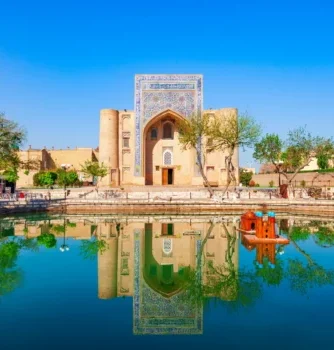
The most picturesque and lively spot in the historical center. Built around a serene water reservoir (*hauz*) surrounded by centuries-old mulberry trees, it is the ideal place to relax with a cup of tea. It is framed by the historic Nadir Divan-Beghi Madrasa, famous for its striking mosaics depicting mythical birds—a rare exception to the traditional Islamic rule against depicting living creatures.
Po-i-Kalyan Complex
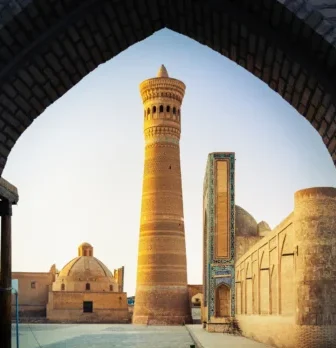
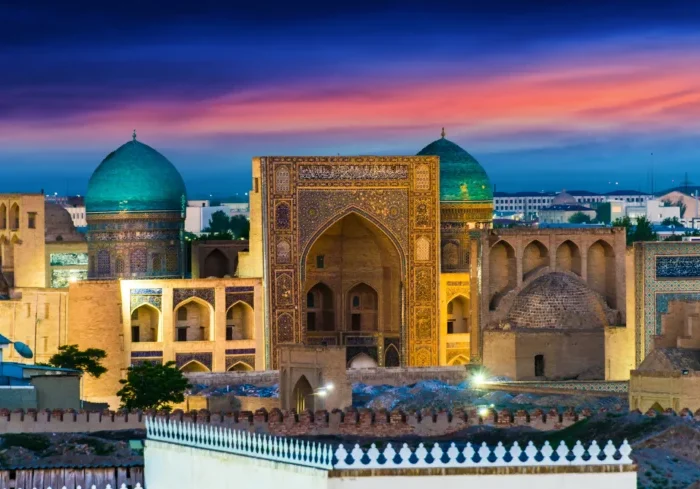
The ultimate architectural gem of Bukhara. It consists of the impressive Kalyan Mosque, the Mir-i-Arab Madrasa with its dazzling turquoise domes, and the imposing Kalyan Minaret. Standing nearly forty-seven meters tall, this minaret was so magnificent that legend says even Genghis Khan was so struck by its beauty that he ordered it spared from destruction.
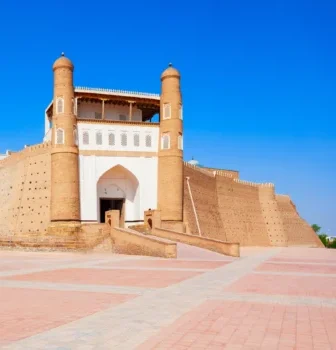
The Ark Fortress
The city's citadel, a veritable fortress within the city. It served as the residence of the Emirs of Bukhara for centuries. Passing through its iconic grand gate, you enter a space that now operates as a museum, housing throne rooms, old mosques, and exhibits recounting the rich and often bloody history of the local dynasties.
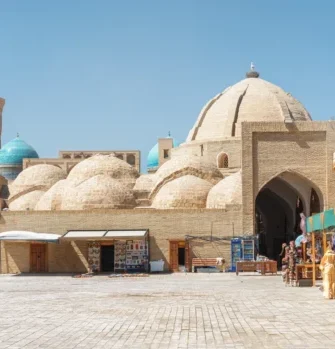
Trading Domes
Bukhara's covered bazaars transport you directly back to the era of the Silk Road. Historically, each dome specialized in different goods, such as jewelry, headwear, or currency exchange. Wander through these labyrinths in search of handmade carpets, exquisite ceramics, and colorful silk textiles while bargaining with local merchants.
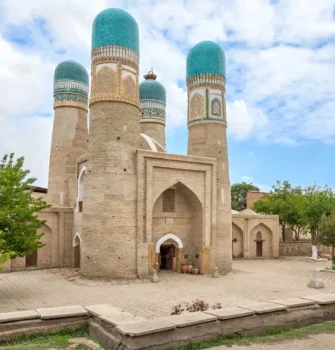
Chor Minor
One of Bukhara's most unique structures. Its name means "four minarets" in Tajik. In reality, these are not minarets, but four decorative towers crowned with turquoise domes that frame the entrance of a former, now-destroyed madrasa. Its serene location adds to its exceptional charm.
Select your Travel type
Search destination
No trips were found matching your selection.
IDEAL DESTINATION
A Melody of History, Bricks, and Ancient Traditions
Gastronomic Journey in Bukhara
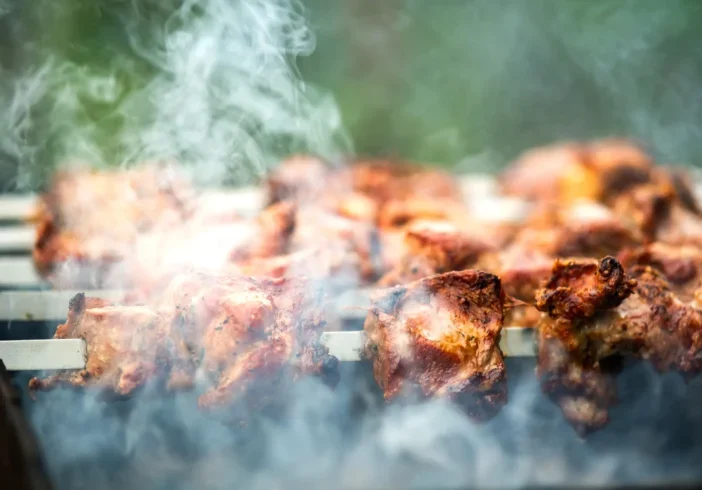
Bukhara’s cuisine offers its own unique twists on Uzbek gastronomy. You must absolutely try the famous Oshi Sofi (Bukhara’s traditional Plov), which is prepared differently, with the ingredients boiled in distinct layers rather than mixed together. The city is also renowned for its incredible roasted lamb and local Shashlik. Do not miss out on sampling the traditional syrup-steeped sweets and local nut-filled halvah, which pair perfectly with green tea served in iconic ceramic bowls (piala).
The Best Time to Visit Bukhara
Spring (April–May) and autumn (September–October) are the absolute ideal seasons. The weather is perfect for wandering around the Old Town for hours without discomfort. Summer in Bukhara is hot and dry (with temperatures reaching and exceeding 40°C), making midday strolls exhausting. Winters are cold and quiet, with tourism dropping significantly.
How to Get Around Bukhara

Transportation Options to and from the Airport
Bukhara International Airport (BHK) is located a very short distance from the historic center (about 10–15 minutes away). As in the rest of the country, the Yandex Go app is the safest, cheapest, and most convenient option for heading directly to your accommodation, saving you from negotiating with local taxi drivers.

Public Transportation
The historic center of Bukhara is compact, largely pedestrianized, and best explored on foot. It does not have a metro system, but if you need to travel outside the historic core (for example, to the Emir’s Summer Palace, Sitorai Mokhi-Khosa), the best solution is taxis via Yandex Go, which are extremely affordable. Alternatively, local minibuses (marshrutkas) operate for the more adventurous travelers.
Questions / Answers
Q&A
No, Greek citizens (and EU citizens in general) travel visa-free for stays up to 30 days. A passport with at least 6 months of validity is required.
Ideally, 2 to 3 full days are more than enough to explore the Old Town at a relaxed pace, do your shopping, and visit the monuments located outside the city center.
The Uzbekistani So’m (UZS). Always carry cash with you, as card payments are often not supported in bazaars, trading domes, and small businesses.
The best, most comfortable, and fastest way is the ultra-modern Afrosiyob high-speed train, which covers the distance in about 4 hours (booking weeks in advance is required).
No, it is strictly recommended to drink bottled water to avoid stomach upsets. It is also advisable to avoid ice cubes in your drinks.
![City Break with food walking tour in Athens [4days]](https://mazitravel.com/wp-content/uploads/2026/01/Athens-AdobeStock_125876014-scaled-e1769512144460.jpeg "City Break with food walking tour in Athens [4days]")