The pace of life in the Galápagos Islands is dictated entirely by sunlight and nature. Days begin very early, with the sounds of sea lions resting on the benches around the harbor. In small inhabited towns such as Puerto Ayora, the atmosphere is a blend of laid-back travelers, biologists carrying diving equipment, and local fishermen. The internet is extremely slow, and luxury takes a back seat. Here, you learn to disconnect from the digital world and realize that, for once, humans are merely temporary visitors on a planet that belongs to the animals.
Galapagos Islands
The Living Laboratory of Evolution in the Pacific Ocean
The Galápagos Islands, a volcanic archipelago located nearly 1,000 kilometers off the coast of Ecuador, are perhaps the world’s premier destination for wildlife and ecotourism. It was here that Charles Darwin found inspiration for his theory of evolution. What makes the Galápagos truly extraordinary is not only the rarity of their wildlife, including giant tortoises, marine iguanas, and blue-footed boobies, but also the fact that these animals have never developed an instinctive fear of humans. Whether you explore the inhabited islands through island hopping or sail aboard a cruise ship to the most remote locations, the Galápagos offer a profound, almost spiritual connection with the natural world.
Highlights
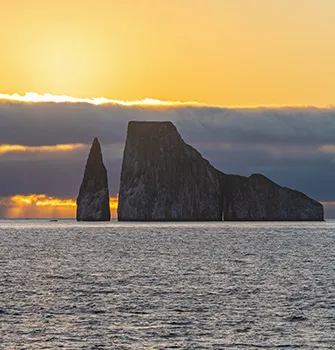
León Dormido / Kicker Rock
A massive volcanic rock rising vertically from the ocean, resembling a sleeping lion. The narrow passage between its two rock formations is one of the world's top spots for snorkeling and diving, as it is frequently visited by Galápagos sharks, hammerhead sharks, rays, and sea lions.
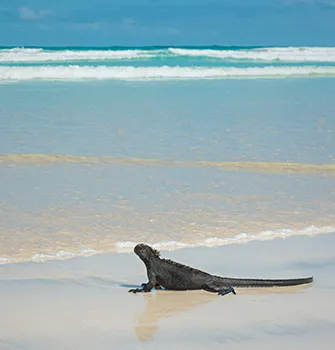
Tortuga Bay
One of the most stunning white-sand beaches in the world, accessible via a 45-minute walk along a paved trail through a forest of giant cacti on Santa Cruz Island. Here, you can walk alongside dozens of marine iguanas and kayak through sheltered waters accompanied by harmless reef sharks and sea turtles.
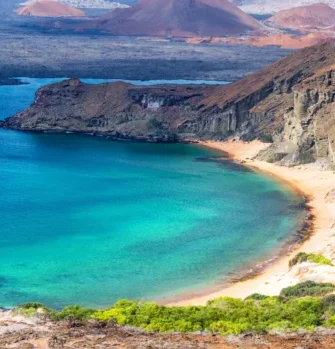
Bartolomé Island
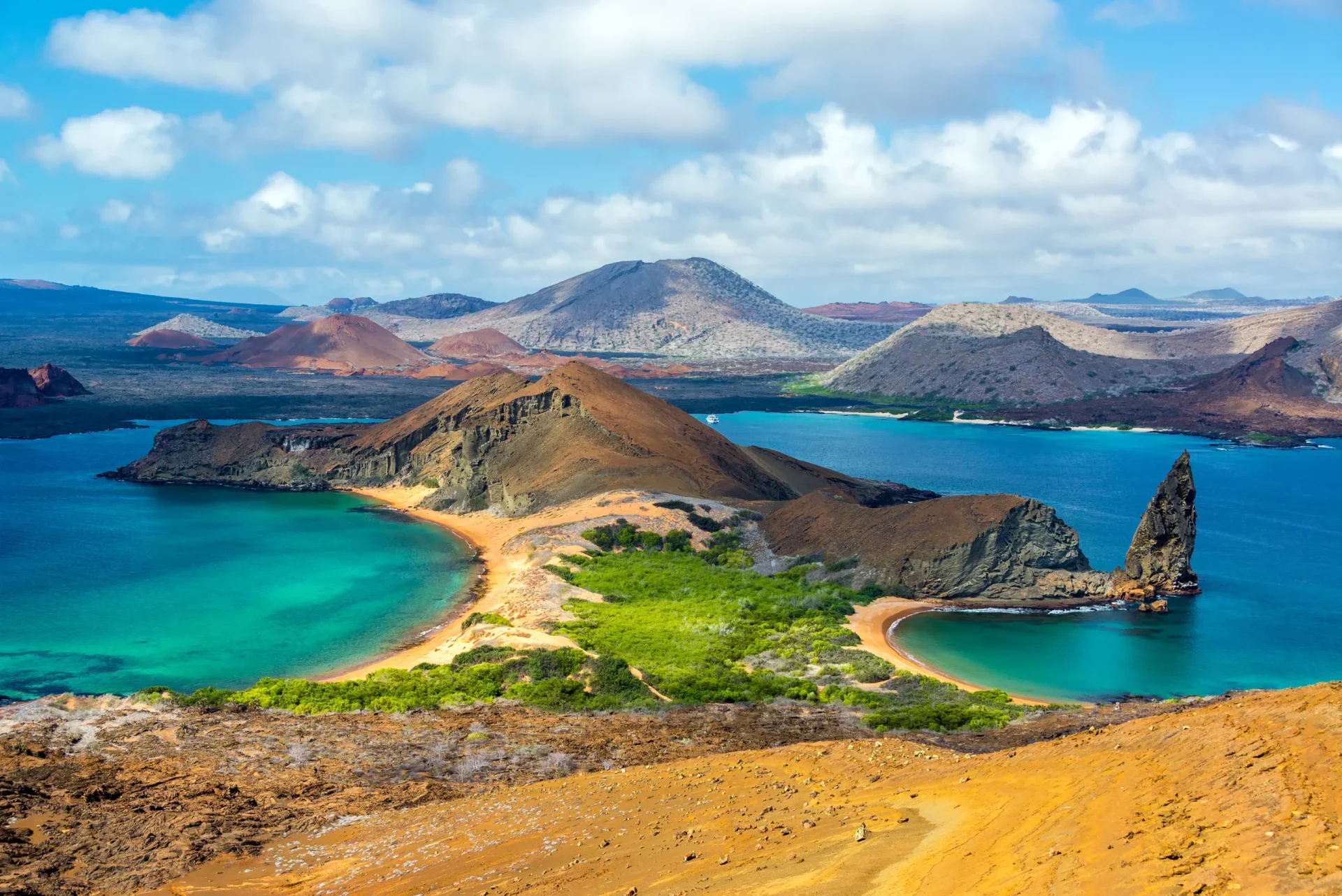
If you've ever seen a classic postcard of the Galápagos Islands, it most likely features the iconic Pinnacle Rock on this island. Accessible on a day trip, Bartolomé offers a truly lunar landscape and one of the best opportunities to swim with the fast-swimming Galápagos penguins.
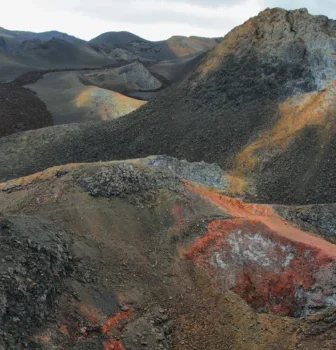
Isabela Island & Sierra Negra Volcano
The largest and wildest inhabited island, Isabela is shaped like a seahorse and boasts spectacular landscapes. A hike to the crater of Sierra Negra Volcano is an absolute must. With a diameter of 10 km, it is the second-largest active volcanic crater in the world and offers otherworldly views of vast fields of solidified lava.
Select your Travel type
Search destination
No trips were found matching your selection.
IDEAL DESTINATION
Nature at the Heart of It All and Complete Disconnection
A Culinary Journey Through the Galápagos Islands
Seafood takes center stage in the Galápagos Islands. The most famous local specialty is Galápagos lobster (Langosta), which can only be caught during strictly regulated months (usually from July to December). Try Ceviche de Canchalagua (a local mollusk with a texture similar to octopus, served with lime and onion), refreshing Ceviche de Camarones (the classic, much-loved ceviche made with fresh shrimp), and traditional Ecuadorian Encocado de Pescado (fresh fish cooked in a rich coconut sauce, served with rice and fried plantains).

The Best Time to Visit the Galápagos Islands
The Galápagos Islands are an excellent year-round destination, but the climate is divided into two distinct seasons. The Warm and Wet Season (December–May) offers warmer, calmer waters, ideal for swimming and snorkeling. The weather is warm, with occasional short tropical showers, and the islands are lush and green. The Dry Season / Garúa (June–November) brings cold, nutrient-rich waters via the Humboldt Current. This is the ideal season for marine wildlife watching and diving, but the waters are cold (a neoprene wetsuit is required), the sea is rougher, and the skies are often cloudy.
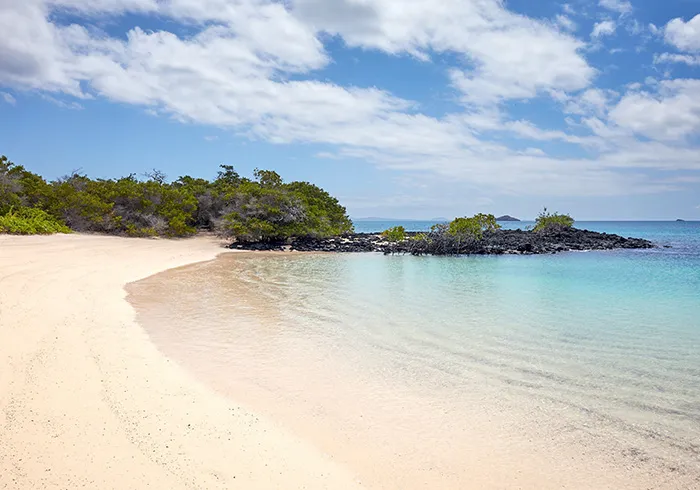
How to Get Around the Galápagos Islands

Transportation Options To and From the Airports
There are two main airports in the Galápagos Islands, with flights arriving from Quito or Guayaquil.
Seymour / Baltra Airport (GPS) serves Santa Cruz Island. Upon arrival, travelers take a short bus ride to the Itabaca Channel, cross by small ferry, and then continue by bus or taxi (a white pickup truck) to the town of Puerto Ayora.
San Cristóbal Airport (SCY) serves the island of the same name and is located just 5 minutes by taxi from the center of Puerto Baquerizo Moreno.

Public Transportation
Transportation between the islands is provided by speedboats (“fibras” or “lanchas”) connecting Santa Cruz, Isabela, and San Cristóbal. The journey takes approximately 2 to 2.5 hours, the sea is often rough, and booking in advance is recommended.
There are no regular bus services within the islands. Taxis are white pickup trucks and offer affordable transportation within the towns. Bicycles are available for rent everywhere and are ideal for exploring nearby beaches, while water taxis at the harbor take passengers to their boats at a minimal cost.
Questions / Answers
Q&A
You do not need a visa. However, there is a strict procedure: At your departure airport (Quito/Guayaquil), you must purchase the INGALA Transit Control Card ($20). Upon arrival in the Galápagos Islands, you must pay the National Park Entrance Fee (which has now increased to $200 per person for foreign tourists). Both fees must be paid strictly in cash.
It depends on your budget and interests. A cruise allows you to visit uninhabited, remote islands with unique wildlife, but it is very expensive. Island hopping (staying in hotels on inhabited islands and taking day trips) is more affordable, offers greater flexibility, and directly supports the local economy.
Strictly NO. National Park regulations require visitors to maintain a distance of at least 2 meters from all animals. Feeding or touching them, as well as using flash photography, is prohibited.
Essentials: biodegradable sunscreen (regular sunscreens are prohibited to protect the coral reefs), sunglasses, a hat, swimwear, a rash guard (Lycra shirt) for sun protection while in the water, comfortable athletic shoes for hiking across lava fields, a waterproof jacket, and motion sickness tablets.
Due to the distance, flight costs, and entrance fees, the absolute minimum is 5 days (visiting only 1–2 islands). Ideally, you should spend 8–10 days to enjoy the full experience, go island hopping, and discover the diversity of wildlife.