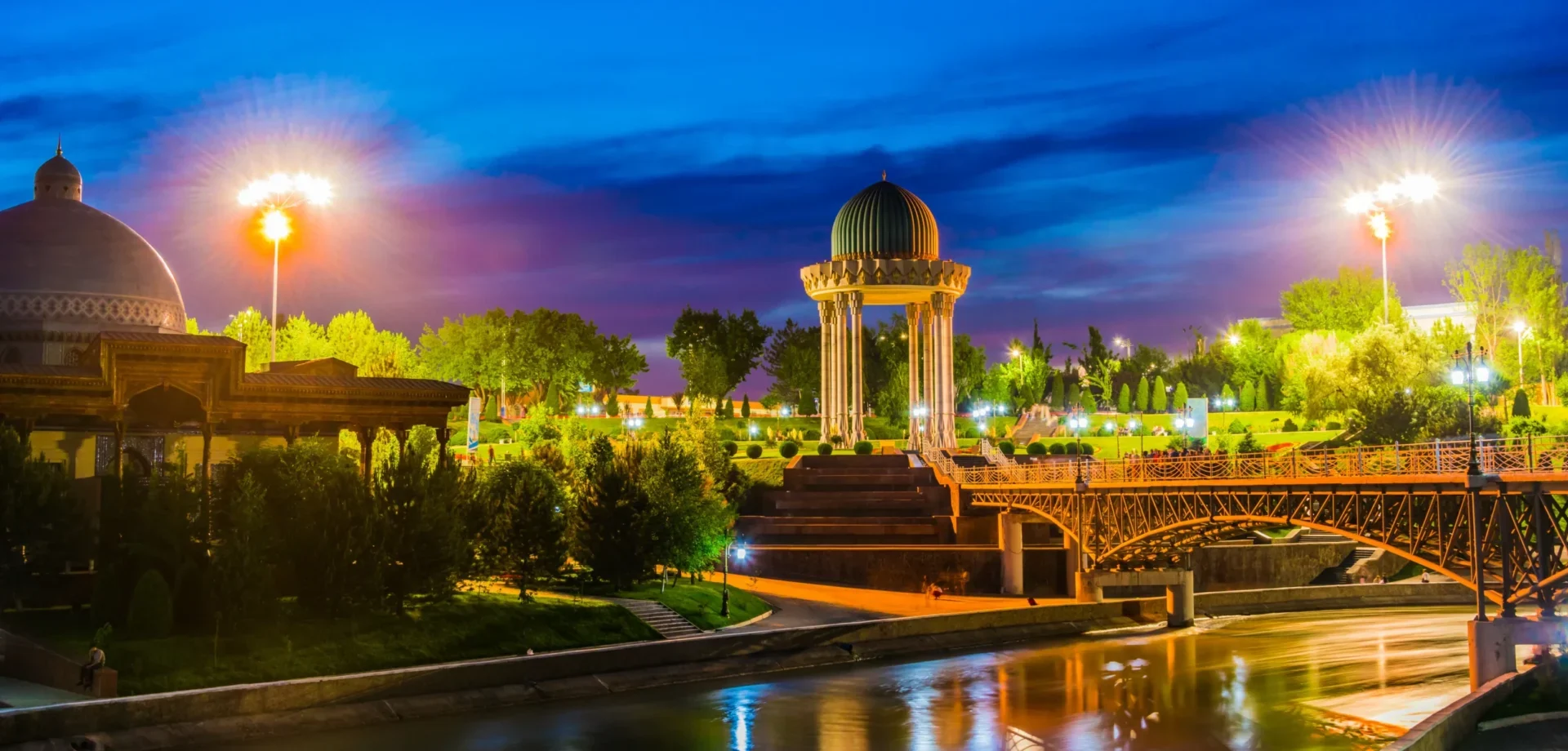
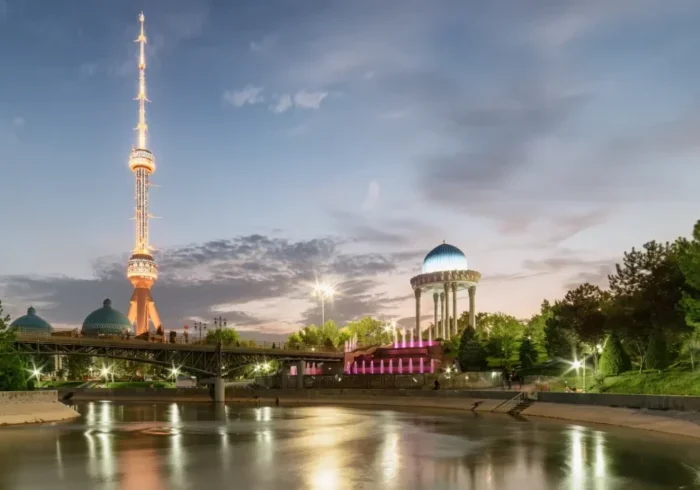
Tashkent is a city that lives and breathes in the present, while simultaneously honoring its rich past. Unlike the open-air museum cities of the South (such as Bukhara), the capital vibrates with an authentic, urban energy. Here, elders wearing traditional embroidered caps (doppa) sip their tea in traditional choyxonas (teahouses), while youth crowd into modern, Western-style cafés along Taras Shevchenko Street. Feel the pulse by strolling through vast parks filled with fountains on warm summer evenings, and surrender to the grandeur of a city that proves authenticity lies in the harmonious coexistence of contrasts.
Tashkent
The "Stone City" Where the Soviet Past Meets the Silk Road
Tashkent (whose name means “Stone City”), the capital and largest city of Uzbekistan, is a fascinating mosaic of contrasts. Having been rebuilt almost from scratch after the devastating 1966 earthquake, the city today is characterized by wide, tree-lined avenues, vast parks, and imposing Soviet monumental/brutalist architecture. However, behind the concrete facades lies the heart of an ancient Silk Road oasis. With its intricate Islamic monuments, colorful, chaotic bazaars smelling of spices and roasted meat, and incredibly warm people, Tashkent is not merely a transit stop, but a vibrant, cosmopolitan Central Asian metropolis. Wander through the underground palace-like stations of its metro and surrender to the magic of a city that successfully bridges three completely different eras.
Highlights
Hazrati Imam
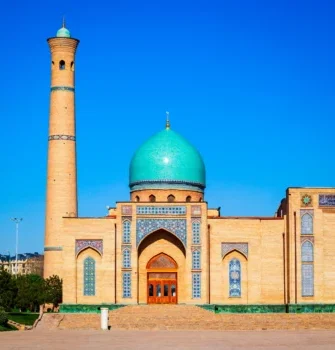
The religious and spiritual center of Tashkent. A beautiful square framed by madrasas with azure domes and intricate mosaics. The ultimate highlight here is the Muyi Mubarak Library, which houses the 7th-century Quran of Uthman, considered the oldest surviving Quran in the world.
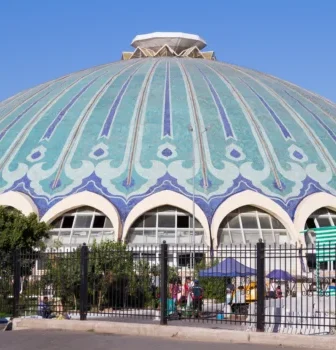
Chorsu Bazaar
The ultimate Central Asian experience. Underneath a massive, blue-green Soviet-era dome lies a vast traditional market. Here you will find mounds of spices, dried fruits, nuts, fresh produce, and countless varieties of cheese. It is well worth visiting the outdoor bakery section, where dozens of bakers bake traditional bread (*non*) in clay tandoor ovens.
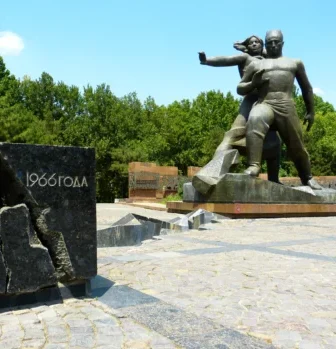
Monument of Courage (Earthquake Memorial)
A deeply moving bronze monument depicting a man attempting to shield his family from a fissure in the ground. It is dedicated to the devastating 5.2 Richter earthquake of April 26, 1966, which leveled most of the city, as well as to the workers from across the USSR who came to rebuild it from its ashes.
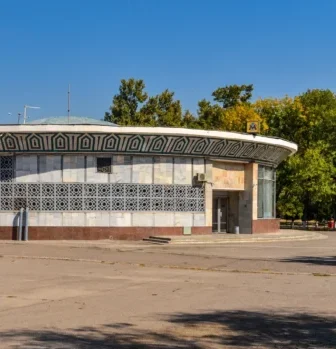
Tashkent Metro
A true underground museum. Built in the 1970s, it was the first metro system in Central Asia. Each station features a completely distinct theme and is crafted from marble, granite, glass, and magnificent chandeliers. Don't miss the Kosmonavtlar station, dedicated to Soviet cosmonauts, and the Alisher Navoi station.
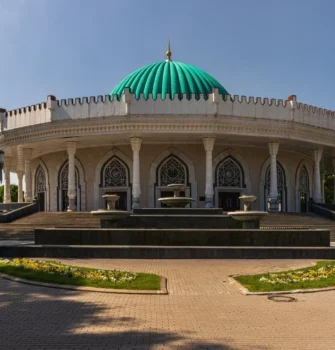
Amir Timur Square & Hotel Uzbekistan
The city's central square features at its heart the impressive equestrian statue of the conqueror Amir Timur (Tamerlane), the country's national hero. Standing prominently right next to it is Hotel Uzbekistan, a massive, iconic Soviet brutalist building that serves as the capital's most photographed retro landmark.
Select your Travel type
Search destination
No trips were found matching your selection.
IDEAL DESTINATION
A Melody of Concrete, Spices, and Modern Life
Gastronomic Journey in Tashkent
Food in Tashkent is a celebration of meat. It is well worth visiting the “Plov Center” (Besh Qozon), a massive restaurant where they cook the famous Plov (rice with meat and carrots) in giant cauldrons right before your eyes. At Chorsu Bazaar, you will find the open-air food hall to try mouthwatering Shashlik (skewers) grilled over charcoal, Samsa (flaky pastries filled with meat), and Lagman (a traditional noodle soup). A meal always concludes with green tea and incredibly sweet local melons.
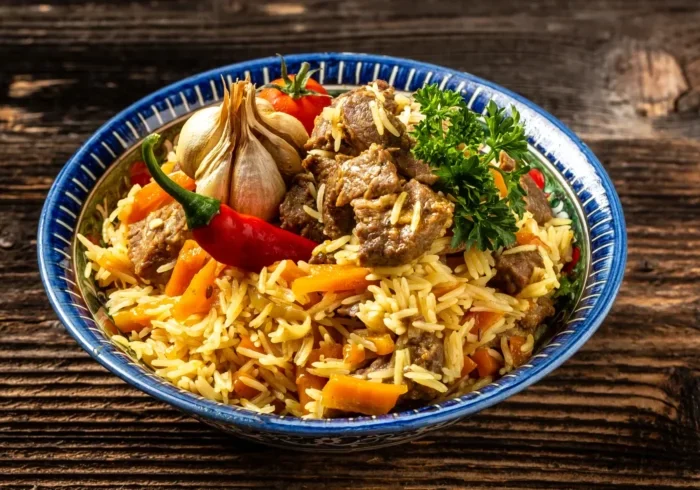
Gastronomic Journey in Tashkent
Food in Tashkent is a celebration of meat. It is well worth visiting the “Plov Center” (Besh Qozon), a massive restaurant where they cook the famous *Plov* (rice with meat and carrots) in giant cauldrons right before your eyes. At Chorsu Bazaar, you will find the open-air food hall to try mouthwatering *Shashlik* (skewers) grilled over charcoal, *Samsa* (flaky pastries filled with meat), and *Lagman* (a traditional noodle soup). A meal always concludes with green tea and incredibly sweet local melons.
How to Get Around Tashkent

Transportation Options to and from the Airport
Tashkent International Airport (TAS) is located very close to the city center (about 15 minutes away). The absolute best and most reliable solution is the Yandex Go app. You can connect to the airport’s Wi-Fi, order your taxi, and entirely avoid the (often exaggerated) fares quoted by aggressive drivers waiting outside arrivals.

Public Transportation
The Tashkent Metro is not just a sight to see, but also the fastest, cleanest, and cheapest way (tickets cost just a few cents) to get around the city. It connects most key points of interest. For destinations not reached by the metro or for late-night travel, taxis via the Yandex Go app are the best, safest, and exceptionally affordable option.
Questions / Answers
Q&A
No, Greek citizens (and EU citizens) travel visa-free for stays up to 30 days. A valid passport with at least 6 months of validity is required.
It is extremely safe. The crime rate is very low, policing is discreet yet effective, and the locals are very eager to help.
The Uzbekistani So’m (UZS). Cash is king, especially in bazaars and small shops. Credit cards are accepted mainly in large hotels and upscale restaurants.
Yes, very much so. Accommodation, food, metro tickets, and taxis cost very little compared to European standards.
The Chimgan Mountains and Charvak Reservoir. Located just 1.5 to 2 hours away, they offer stunning alpine scenery, skiing in winter, and hiking during the summer.
![City Break with food walking tour in Athens [4days]](https://mazitravel.com/wp-content/uploads/2026/01/Athens-AdobeStock_125876014-scaled-e1769512144460.jpeg "City Break with food walking tour in Athens [4days]")