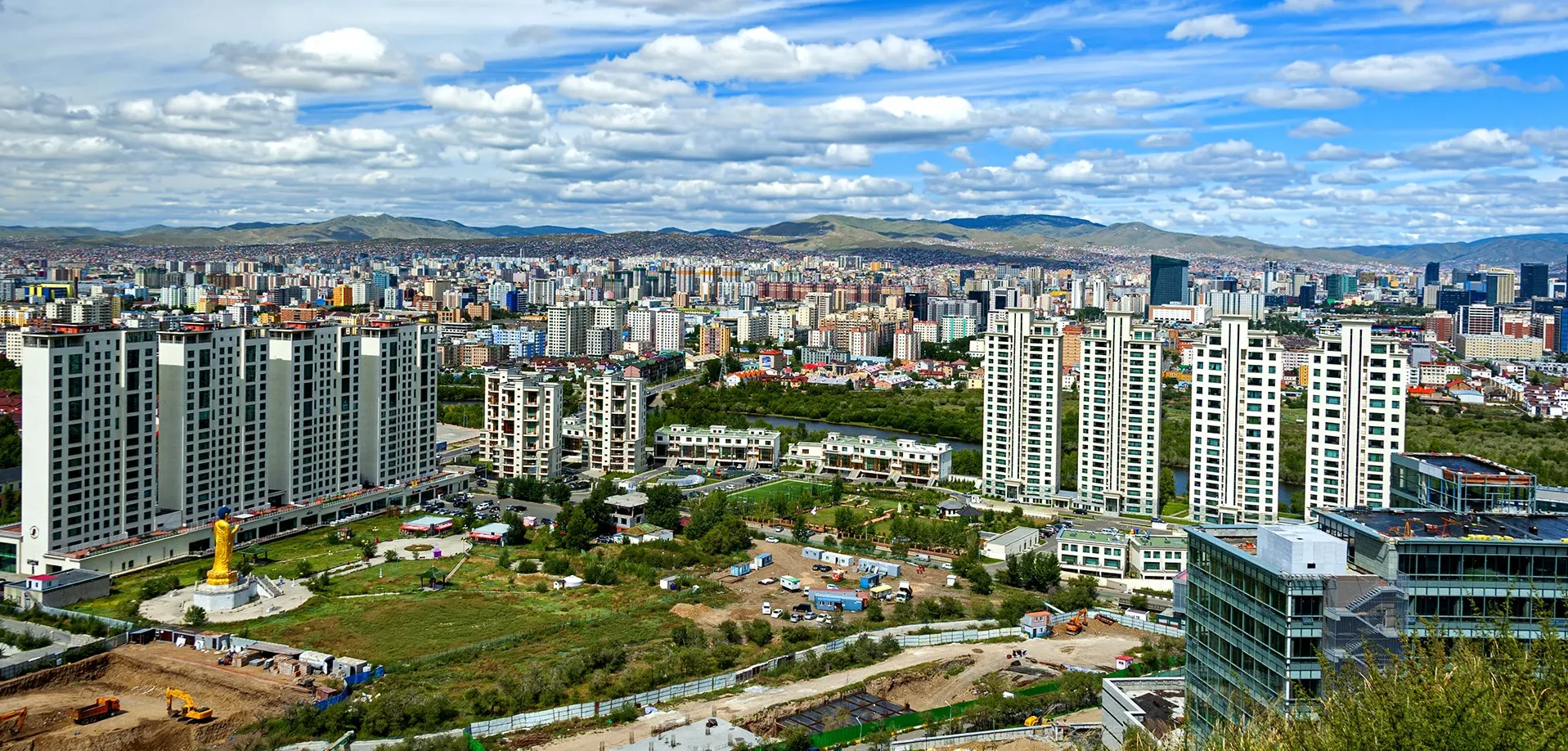
Ulaanbaatar is a city where the soothing sounds of Buddhist mantras blend harmoniously with the vibrant rhythm of modern urban life. It is the perfect destination for travellers seeking authentic cultural experiences without sacrificing modern comforts. Nestled between majestic mountain ranges and vast open steppes, Mongolia’s capital brings together the rich heritage of nomadic traditions and the dynamic spirit of urban transformation. Ancient Buddhist temples, Soviet-era architecture and contemporary cafés coexist in a fascinating city filled with energy, contrasts and constant evolution. Ulaanbaatar is a captivating crossroads between past and future, tranquillity and vibrancy, offering a unique opportunity to discover the enduring spirit of Mongolia in a rapidly changing world.
Ulaanbaatar
Discover the Heartbeat of Mongolia, from the Vast Steppes to Modern City Streets
Ulaanbaatar, a city where tradition meets modern progress, is the vibrant cultural heart of Mongolia. Here, centuries-old Buddhist monasteries stand alongside gleaming skyscrapers and trendy cafés, creating a fascinating blend of history and contemporary life. At the heart of the city lies Sükhbaatar Square, surrounded by a rich tapestry of museums, Buddhist temples and bustling local markets that reflect Mongolia’s unique cultural identity. Explore the impressive Chinggis Khaan National Museum, follow in the footsteps of Buddhist monks at Gandan Monastery, and embark on unforgettable excursions to the magnificent Chinggis Khaan Equestrian Statue or the breathtaking landscapes of Terelj National Park. Ulaanbaatar is the perfect destination for travellers seeking to immerse themselves in the rich traditions and nomadic heritage of the Mongolian steppes, while enjoying the comforts and vibrant atmosphere of modern city life.
Highlights

Gandan Monastery (Gandan Khiid)

Sükhbaatar Square

The Bogd Khaan Palace Museum

Zaisan Memorial
Select your Travel type
Search destination
Where the Nomadic Spirit Meets the Modern World
A Culinary Journey Through Ulaanbaatar
The cuisine of Ulaanbaatar is simple, hearty and nourishing, deeply rooted in Mongolia’s nomadic traditions and way of life. For a truly authentic culinary experience, be sure to visit a traditional ger restaurant, where you can discover the flavours and hospitality of Mongolian culture. Meat-based dishes take centre stage, including buuz (traditional Mongolian steamed dumplings), khuushuur (crispy fried pastries filled with meat), tsuivan (stir-fried noodles with lamb) and airag (traditional fermented mare’s milk).
Characterised by rich, hearty flavours and a strong emphasis on meat and dairy products, Mongolian cuisine reflects the country’s climate, traditions and nomadic heritage. Every meal in Ulaanbaatar offers an authentic taste of Mongolian identity and everyday life, inviting travellers to discover the flavours, warmth and timeless traditions of the nomadic heart of Mongolia.

The Best Time to Visit Ulaanbaatar
Ulaanbaatar is widely regarded as the coldest capital city in the world, with exceptionally low temperatures during the winter months. Due to its harsh climate, the best time to visit Ulaanbaatar is during the short summer season, from mid-June to mid-August, when temperatures are milder and weather conditions are more favourable for sightseeing and outdoor activities. This is also the season when numerous traditional festivals and cultural celebrations take place, offering visitors a wonderful opportunity to experience Mongolia’s rich heritage, colourful traditions and vibrant local atmosphere. Travelling during this period allows you to discover the city at its most lively while enjoying the unique charm of a Mongolian summer.

How to Get Around Ulaanbaatar

Airport Transfer Options
Chinggis Khaan International Airport (UBN) is the main international gateway to Ulaanbaatar, Mongolia’s vibrant capital. Located approximately 50 km south of the city centre, the modern airport replaced the former Buyant-Ukhaa International Airport in 2021.
Travellers can reach Ulaanbaatar by airport shuttle bus, taxi or private transfer, with journey times depending on traffic conditions.
Alternatively, Ulaanbaatar can be reached by train via the legendary Trans-Mongolian Railway, with international services connecting the Mongolian capital to Beijing in China and Irkutsk in Russia.
The historic Moscow–Ulaanbaatar–Beijing through-service is currently suspended, so travellers should check the latest rail connections and timetables before planning their journey.

Public Transport
Getting around Ulaanbaatar is relatively straightforward, with several transport options available for exploring the city and its surrounding areas.
Visitors can use public buses, trolleybuses, taxis and minibuses, the latter generally accommodating up to eight passengers.
For longer journeys or excursions beyond the city, hiring a private car offers greater comfort and flexibility, allowing travellers to explore Mongolia’s spectacular landscapes and nearby attractions at their own pace.
Q&A
You can reach Ulaanbaatar by international flights to Chinggis Khaan International Airport, with connections from major cities such as Beijing, Seoul and Moscow.
Yes, Ulaanbaatar is generally considered safe for tourists, provided they take standard safety precautions, particularly when travelling at night or visiting busy markets and crowded areas.
Pack season-appropriate clothing, as Ulaanbaatar’s climate varies dramatically throughout the year. Warm layers and insulated clothing are essential during the freezing winter months, while lightweight, comfortable clothing is ideal for summer. Dressing in layers is recommended to accommodate sudden changes in temperature.
Popular day trips from Ulaanbaatar include the magnificent Chinggis Khaan Equestrian Statue, the breathtaking landscapes of Gorkhi-Terelj National Park, and visits to traditional nomadic camps on the Mongolian steppes, where travellers can experience the country’s authentic nomadic lifestyle, rich cultural traditions and warm hospitality.
The Naadam Festival is Mongolia’s most important national celebration, held every July. It features traditional competitions in Mongolian wrestling, horse racing and archery, celebrating the country’s rich nomadic heritage, cultural traditions and national identity.
![City Break with food walking tour in Athens [4days]](https://mazitravel.com/wp-content/uploads/2026/01/Athens-AdobeStock_125876014-scaled-e1769512144460.jpeg "City Break with food walking tour in Athens [4days]")