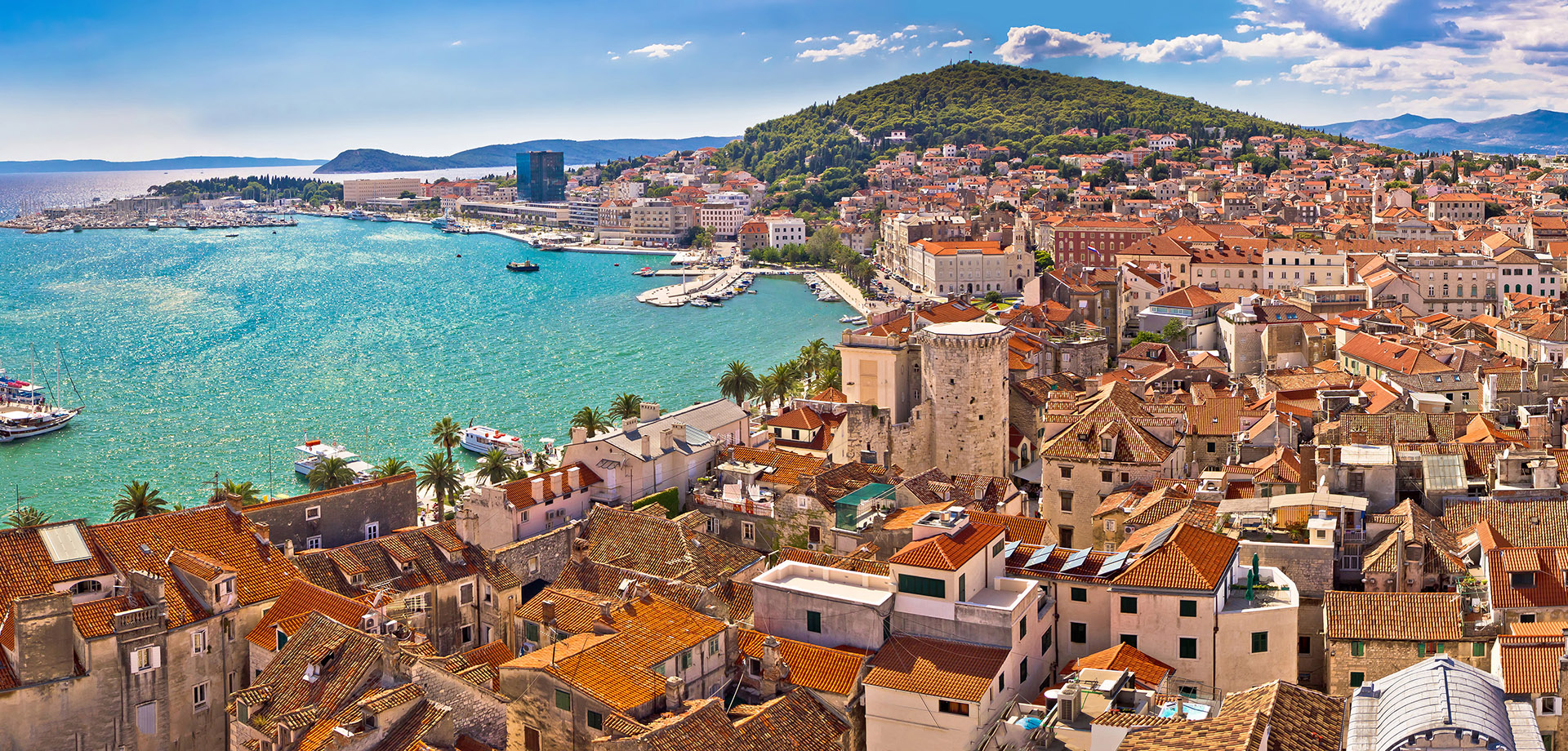
Split’s identity is unique—a vibrant old town where residents live among Roman walls and squares, set against the backdrop of the Adriatic. It is authentic, lively, and deeply Mediterranean, with a historic heart and a laid-back soul. It is an ideal destination because it combines history, sea, and a vibrant atmosphere. The impressive Diocletian’s Palace, picturesque alleyways, and the Riva promenade create a unique experience. The city offers beautiful beaches, nearby islands, and a Mediterranean climate, perfect for relaxation and exploration all year round.
Split
Where Roman History Meets the Adriatic Breeze
Split is the second largest city in Croatia, built between mountain slopes and the blue of the Adriatic. The heart of Split beats in Diocletian’s Palace, with its underground galleries, temples, and courtyards—one of the best-preserved Roman monuments in the world and a UNESCO World Heritage site. It forms the center of the city, filled with residences, shops, cafes, and restaurants within the ancient walls. Key attractions include the Cathedral of St. Domnius inside the old mausoleum of Diocletian, the cellar of the palace featuring impressive Roman architecture, the Golden Gate & Peristyle, as well as the Archaeological Museum and the Museum of Croatian Fine Arts. Split is surrounded by crystal-clear waters and natural beauty. Its beaches are small coves with pristine waters and rocky landscapes. Bačvice Beach is famous for its sand and shallow waters, while Kašjuni & Bene on the Marjan Peninsula are surrounded by forest, making them ideal for relaxation. Split hosts festivals such as the Split Summer Festival, with concerts and performances at the Peristyle or the National Theatre, and for nightlife, there are options including wine bars, clubs, and open-air concerts.
Highlights
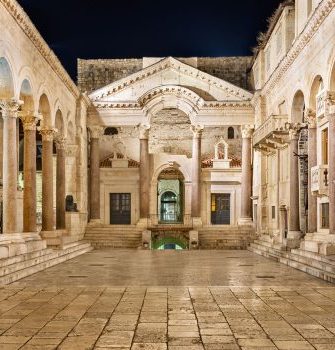
Diocletian's Palace
One of the best-preserved Roman palaces in the world, with narrow alleyways, underground galleries, and residences steeped in history.
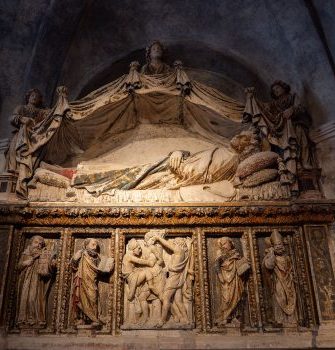
Cathedral of St. Domnius
Built over a Roman mausoleum, the Cathedral of St. Domnius is one of the oldest Christian buildings in the world, featuring an iconic bell tower and a unique view.
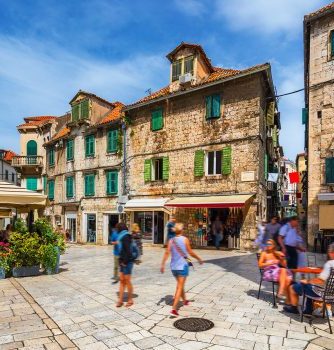
Old Town of Split
A vibrant labyrinth of cobblestone alleyways, Roman walls, and stone houses, with Diocletian's Palace at its center where history and everyday life harmoniously coexist.
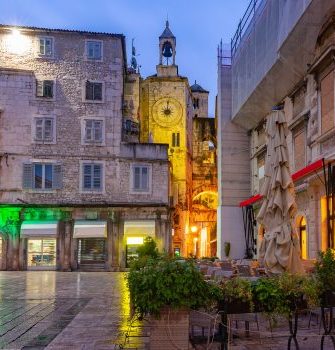
City Clock (Gradski Sat)
The characteristic medieval clock at the entrance of the Palace stands out with its 24-hour dial. It is a popular meeting point and one of the most photographed spots.
Select your Travel type
Search destination
No trips were found matching your selection.
IDEAL DESTINATION
Roman Grandeur with a Seaside Pulse
Gastronomic Journey to Split
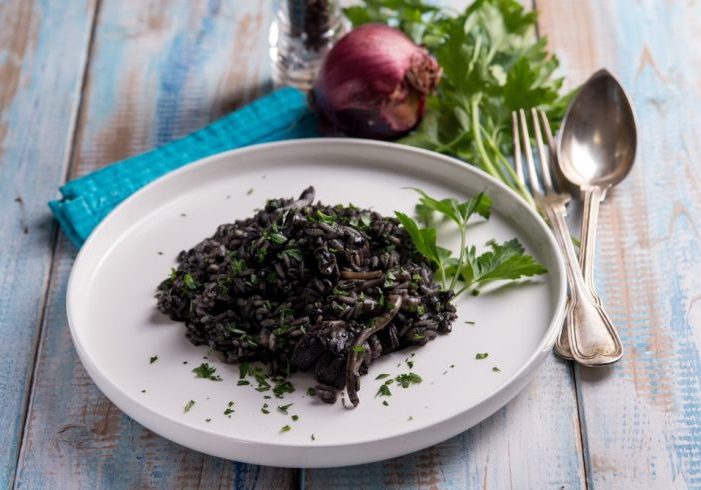
The flavor of Split is based on olive oil, fresh seafood, and aromatic herbs. From slow-cooked dishes like “pašticada” and black risotto with cuttlefish to grilled fish, homemade wine, and prosciutto—Split’s gastronomy exudes simplicity and authenticity. The konobe (traditional taverns) offer authentic Dalmatian experiences.
The Best Time to Visit Split
Split can be visited all months of the year. However, the weather is most favorable from May to September.
How to Get Around Split

Options for Transport to/from the Airport
You can travel to Split by air as it has its own airport. Flight tickets can be found year-round from Thessaloniki as well as Athens, either direct or via other European cities. For your transfer to the city center, you can use airport taxis, which cost approximately €30. For your convenience, you can book in advance and avoid unnecessary charges.

Public Transport
The size of the city allows you to explore it on foot. However, for your convenience, you can also use the city’s taxis.
Questions / Answers
Q&A
2–3 days are sufficient for the old town, beaches, and day trips to the surrounding islands.
Absolutely. It is the “heart” of Split, boasting a unique atmosphere and architectural grandeur, remaining lived-in even today.
Yes, it is the perfect starting point for day trips to Hvar, Brač, Šolta, and other Dalmatian islands.
Yes, such as Bačvice, Firule, and Trstenik—offering different styles, from sandy to rocky with crystal-clear waters.
Absolutely. It features quiet areas, family-friendly beaches, family restaurants, and a safe environment for children.
![City Break with food walking tour in Athens [4days]](https://mazitravel.com/wp-content/uploads/2026/01/Athens-AdobeStock_125876014-scaled-e1769512144460.jpeg "City Break with food walking tour in Athens [4days]")