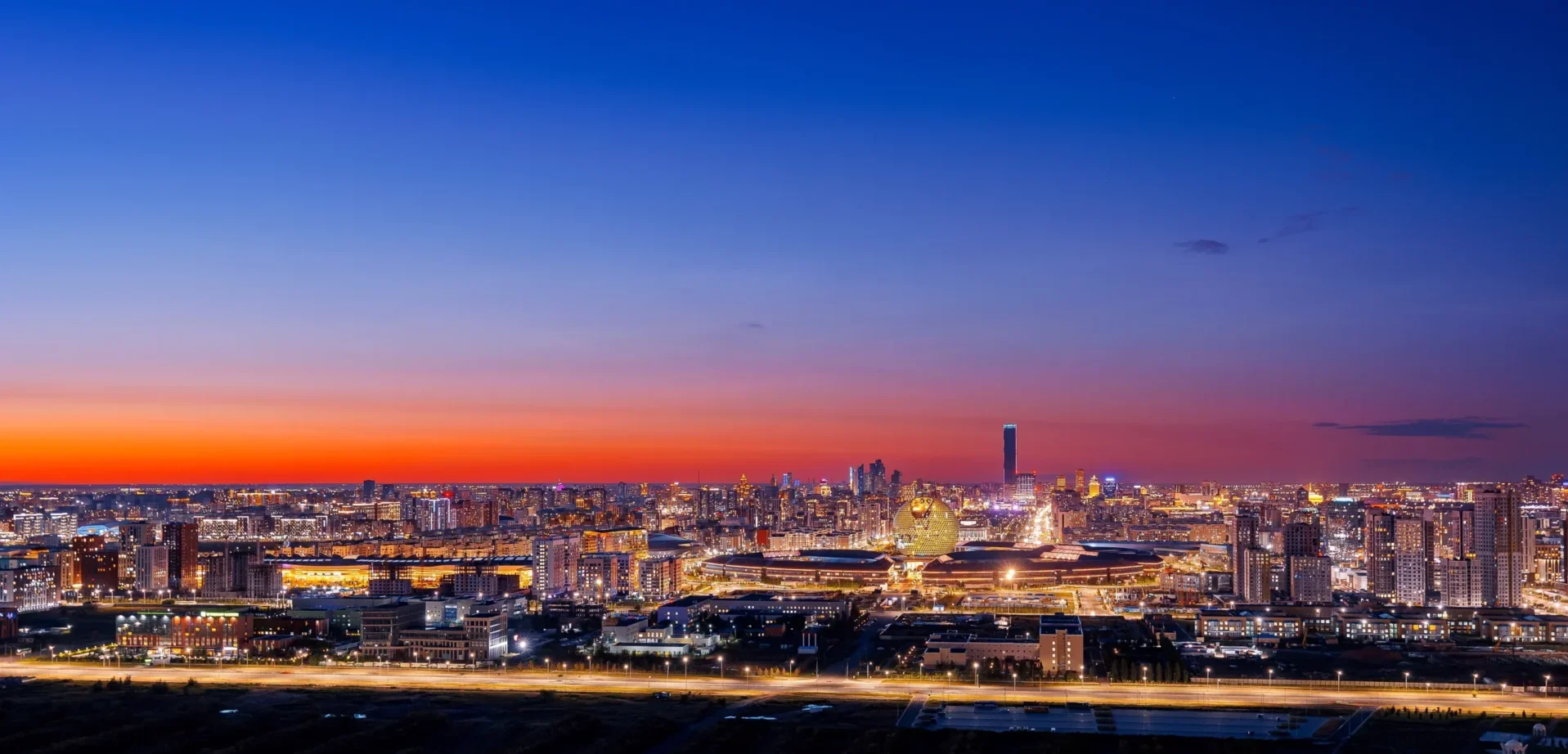
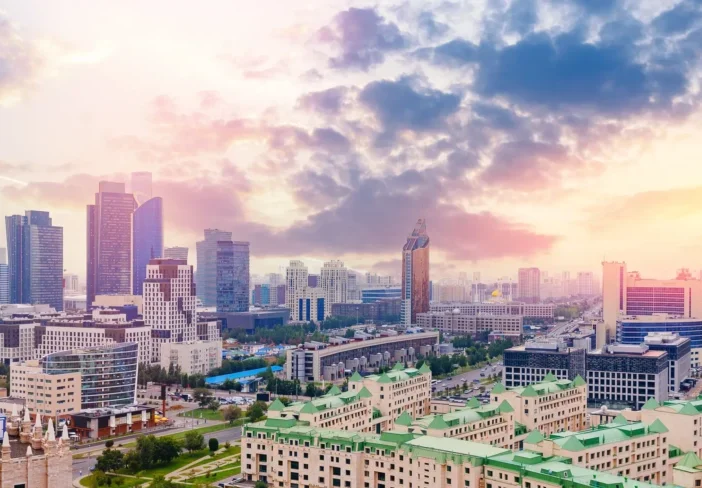
Astana is not an ordinary city; it is a bold experiment. It is the city where the wind of the vast steppe whistles through space-age skyscrapers. In contrast to the tree-lined and historic Almaty, Astana exudes a more “staged” yet utterly impressive aura. Here, long distances are crossed against a backdrop of neon lights and buildings that change colors at night. Walk along the Ishim River, which separates the old (right bank) from the new city (left bank), feel the absolute order of its avenues, and surrender to the modernism of a capital built to prove that in Central Asia, the future has already arrived.
Astana
The futuristic "Dubai of the Steppe" in the heart of Asia
Astana, the impressive capital of Kazakhstan (which was named Nur-Sultan from 2019 to 2022), is a city that seems straight out of a science fiction movie. Built literally from scratch on the vast, windswept northern steppes since the late 1990s, it stands as the ultimate symbol of the country’s ambition and wealth. Here, world-renowned architects unleashed their imagination to create an urban landscape filled with ultra-modern skyscrapers, glass pyramids, and golden towers. Although its climate is extreme (it is the second-coldest capital in the world), Astana exudes a unique dynamism. Wander along its vast, immaculate avenues, admire the monumental buildings that defy gravity, and discover a landmark 21st-century city that bridges ancient nomadic culture with the ultimate futuristic future.
Highlights
Baiterek Tower
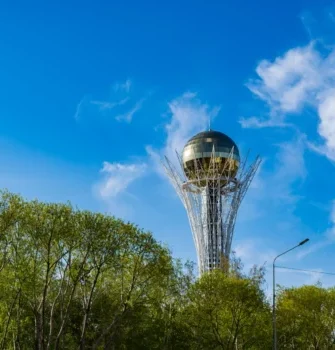
The ultimate symbol of the city. This 97-meter tower represents an ancient Turkic myth: the tree of life and the golden egg laid in its branches by the mythical bird Samruk. Ascending into the golden sphere, you will enjoy a breathtaking 360-degree view of the entire city and be able to place your hand in the golden handprint of the country's first president.
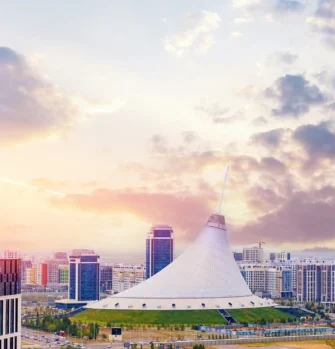
Khan Shatyr Entertainment Center
A massive, transparent tent rising impressively against the skyline, designed by the famous architect Norman Foster. It is the largest tent-shaped structure in the world. Besides shops, its interior (which maintains summer temperatures even when it is -30°C outside) houses an artificial resort with an indoor beach made of sand brought all the way from the Maldives!
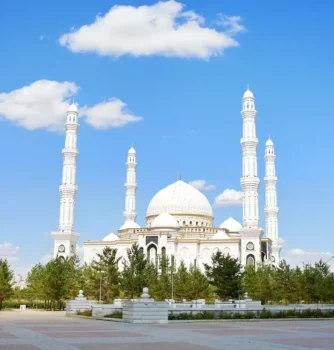
Hazrat Sultan Mosque
The largest mosque in Central Asia (until the recent construction of the city's new Grand Mosque), Hazrat Sultan is a true masterpiece of Islamic architecture. With its white marble walls, impressive domes, and the capacity to host thousands of worshippers, it exudes tranquility and grandeur.
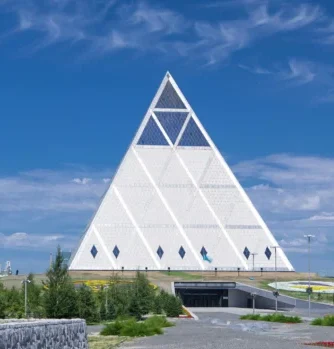
Palace of Peace and Reconciliation
Another work by Norman Foster, this perfect glass pyramid was designed to host the Congress of Leaders of World and Traditional Religions. Its interior houses an opera house, cultural centers, and a stunning glass dome decorated with doves symbolizing peace.
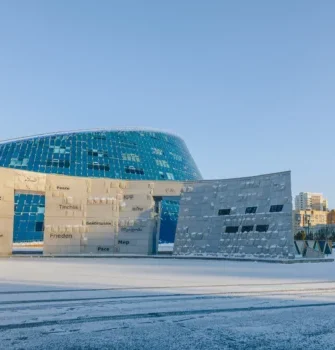
National Museum of the Republic of Kazakhstan
A massive, modern museum built with blue glass and white marble that tells the story of the nation from antiquity to the present day. The most famous exhibit is the "Golden Man" (Golden Warrior), an impressive suit of a Scythian warrior covered in thousands of gold pieces, which stands as a national treasure.
Select your Travel type
Search destination
No trips were found matching your selection.
IDEAL DESTINATION
A Melody of Glass, Steel, and Steppe Air
Gastronomic journey in Astana
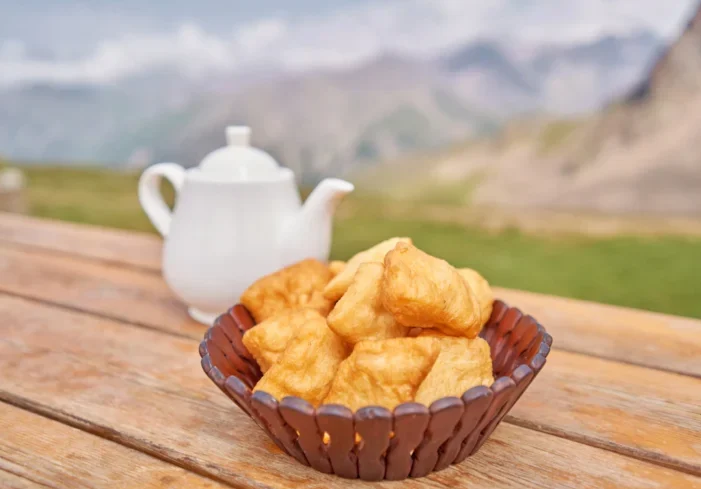
As in the rest of the country, meat predominates. You can find excellent Beshbarmak (the national dish), Baursak (fluffy pieces of fried dough served with every meal), and Manty (large steamed dumplings stuffed with meat) in traditional restaurants. However, as a modern capital, Astana offers a much more cosmopolitan culinary scene. You will find luxurious restaurants with panoramic views serving everything from fine Russian and Georgian dishes to excellent sushi and international fusion cuisine, always accompanied by fine tea or vodka.
The best time to visit Astana
Summer (June to early September) is by far the best season. Temperatures are warm and pleasant, the squares come alive, and you can walk around comfortably. Warning: winter in Astana is brutal. Temperatures often drop below -30°C or even -40°C, accompanied by strong, freezing winds from Siberia. Unless you are prepared for extreme cold, avoid the months from November to March.
How to get around Astana

Transportation options to and from the airport
Nursultan Nazarbayev International Airport (NQZ) is located about 15-20 kilometers from the center (the new city). The fastest and most reliable way is, once again, the Yandex Go app. The taxi ride will cost you very little compared to European standards. Alternatively, buses 10 and 12 connect the airport with central parts of the city.

Distances in Astana are huge — buildings look close due to their size, but they are not. The city does not have a metro system (a light rail LRT project is under construction, but it has been delayed for years). The main public transport relies on ultra-modern, clean city buses (you pay by card). Nevertheless, due to the cold or the long distances, taxis (Yandex Go) are the smartest and most common option for visitors.
Questions / Answers
Q&A
No visa is required for Greek citizens (and EU citizens) for stays up to 30 days. A valid passport is required (ID card is not accepted).
Very safe. It serves as a showcase for the country, policing is prominent, and the crime rate remains extremely low.
The currency is the Tenge (KZT). Card payments, Apple Pay, or Google Pay are extremely widespread almost everywhere.
It is slightly more expensive than Almaty, especially in luxury hotels, yet it remains very affordable compared to Western Europe.
Burabay National Park (or Borovoe), also known as the “Switzerland of Kazakhstan” with lakes and pine forests, and the deeply moving ALZhIR museum-memorial (a former gulag camp).
![City Break with food walking tour in Athens [4days]](https://mazitravel.com/wp-content/uploads/2026/01/Athens-AdobeStock_125876014-scaled-e1769512144460.jpeg "City Break with food walking tour in Athens [4days]")