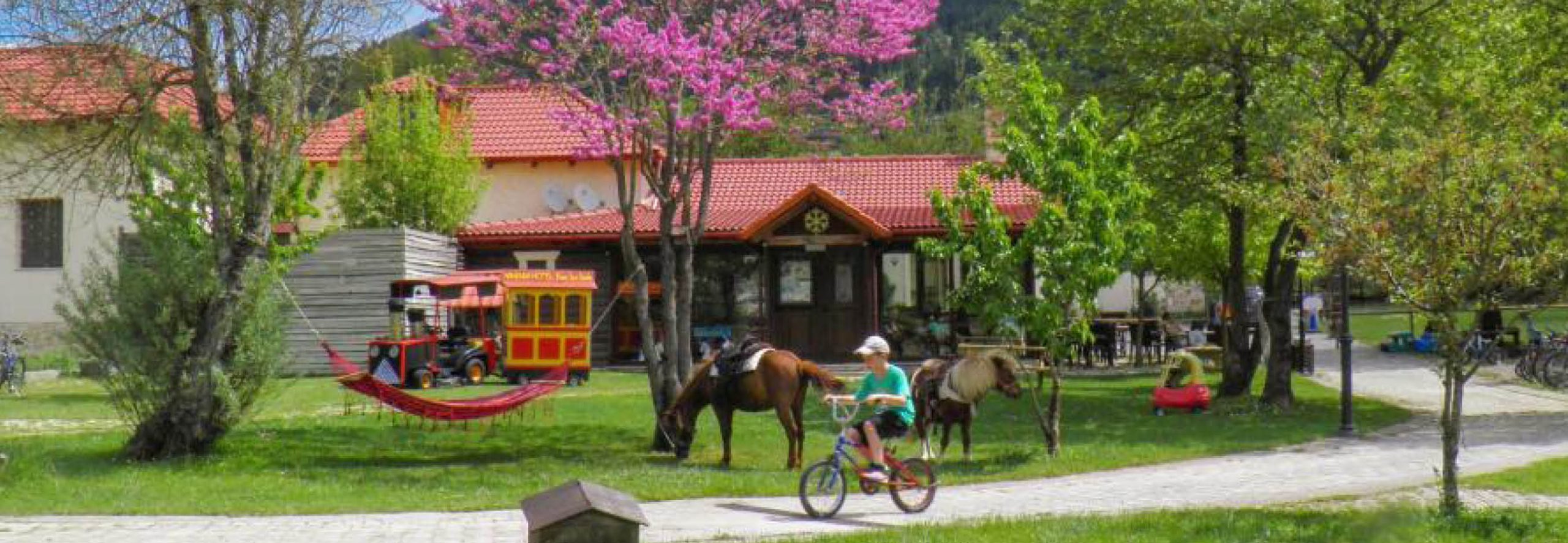
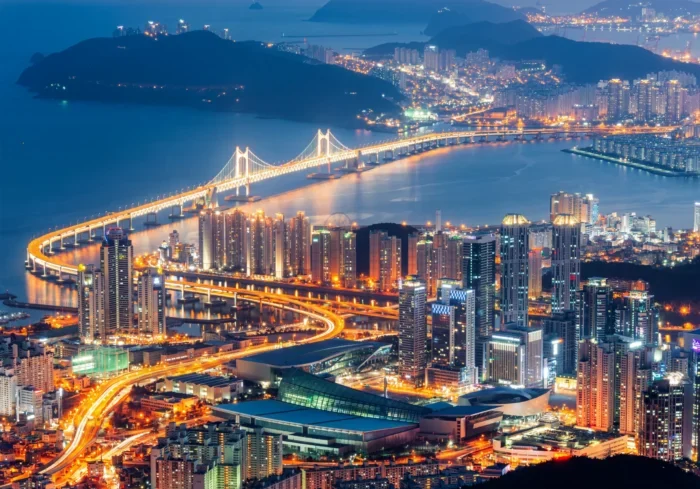
Busan is a captivating city of striking contrasts, where modern life unfolds at a vibrant pace beneath magnificent bridges, such as the iconic Gwangan Bridge, which lights up spectacularly after dark. At the same time, tradition remains deeply rooted in the peaceful mountain trails and bustling open-air markets.
Proud of their distinctive local dialect, known as Satoori, and their warm, welcoming and open-hearted nature, Busan’s residents love gathering at lively restaurants and traditional pojangmacha (Korean street food stalls), often set against the beautiful coastal backdrop.
Experience the city’s vibrant energy with an evening stroll along the waterfront, savour delicious local specialities and immerse yourself in the enchanting atmosphere of a destination that effortlessly balances the excitement of metropolitan life with the Zen-like tranquillity of nature.
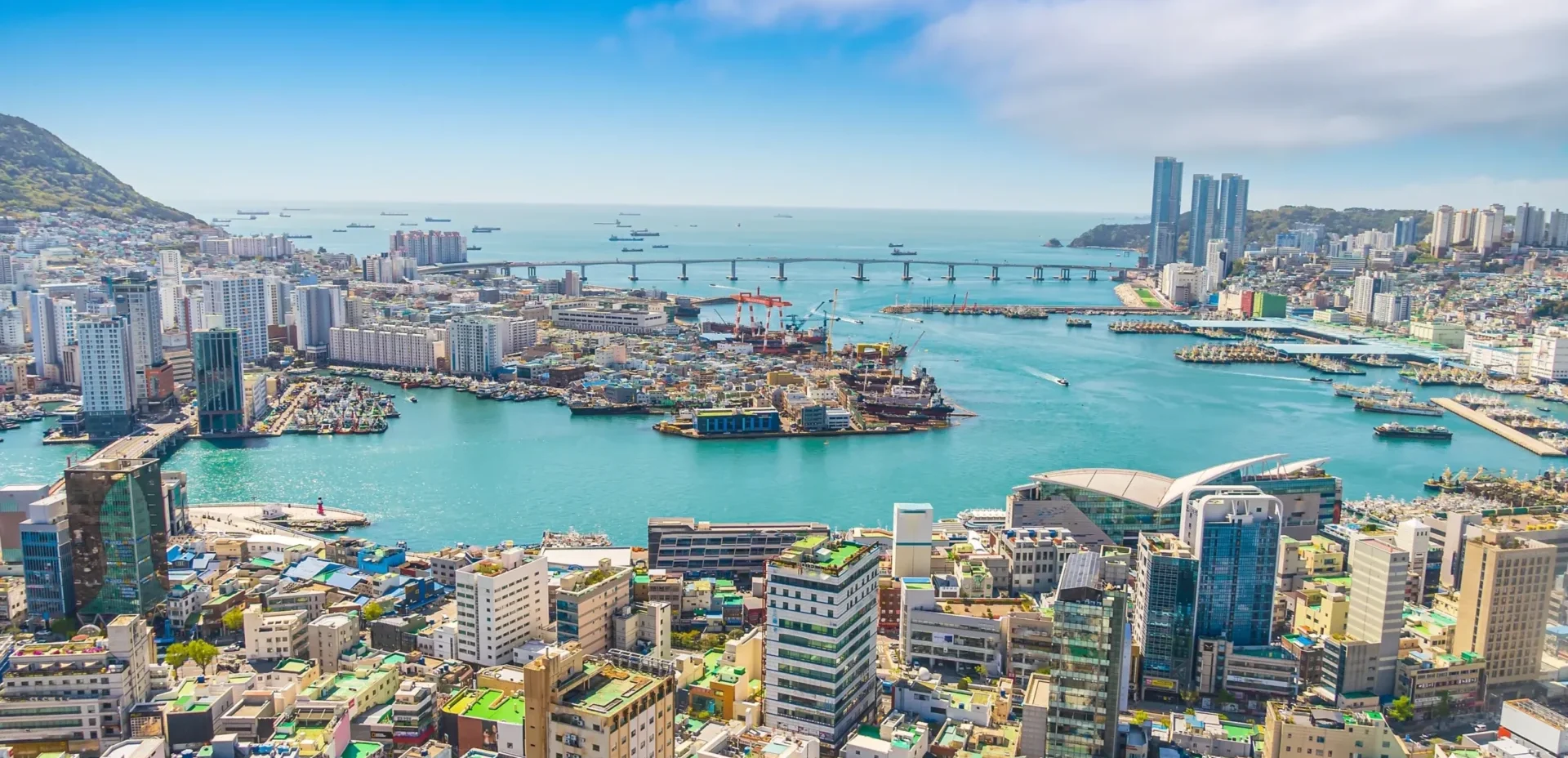
Busan
South Korea’s Vibrant and Colourful Coastal Capital
Busan, the second-largest city in South Korea, is a captivating coastal metropolis where lush green mountains meet the endless ocean. In contrast to the fast-paced lifestyle of Seoul, Busan offers a more relaxed seaside atmosphere without compromising its cosmopolitan charm and modern energy. Here, gleaming skyscrapers and neon-lit bridges coexist harmoniously with traditional Buddhist temples and colourful hillside villages, creating a fascinating blend of old and new. With its vast sandy beaches, bustling seafood markets brimming with fresh local delicacies and the warm hospitality of its people, Busan is a destination that awakens the senses. It perfectly combines the beauty of Korean tradition with the excitement of contemporary pop culture, offering visitors a truly unforgettable travel experience.
Highlights
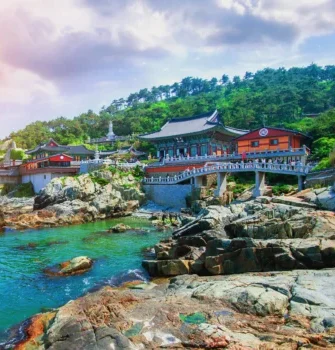
Haedong Yonggungsa Temple
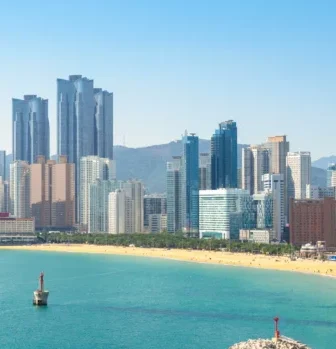
Haeundae Beach
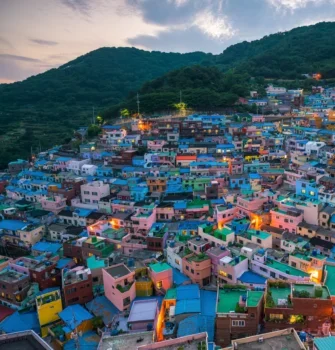
Gamcheon Culture Village
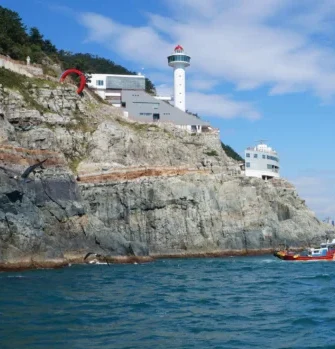
Taejongdae Park
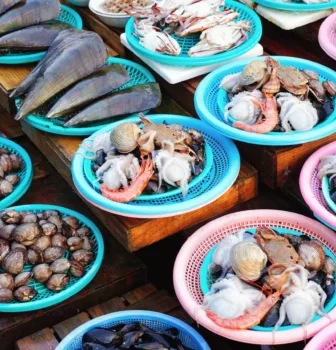
Jagalchi Fish Market
Select your Travel type
Search destination
A Symphony of Waves, Neon Lights and Korean Tradition
A Culinary Journey Through Busan
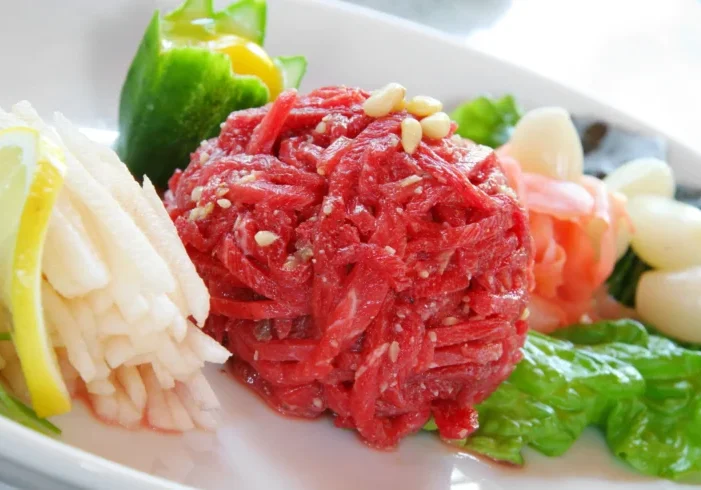
Busan’s culinary scene is deeply connected to the sea, offering an irresistible variety of authentic Korean flavours. A must-try local speciality is Dwaeji Gukbap, a rich and comforting pork and rice soup that has become one of the city’s signature dishes. At the famous Jagalchi Fish Market, adventurous food lovers can enjoy fresh raw fish (Hoe) and even live octopus (Sannakji), a truly unique culinary experience for the daring. For a delicious taste of Busan’s vibrant street food culture, don’t miss Ssiat Hotteok, a sweet, crispy fried pancake filled with brown sugar, honey and a generous mixture of sunflower seeds and nuts. In Busan, every dish tells a story of coastal traditions, local culture and authentic Korean hospitality.
The Best Time to Visit Busan
Spring (April–May) is a magical time to visit Busan, when beautiful cherry blossoms transform the city into a sea of pink. Autumn (September–October) offers pleasant, cooler temperatures and clear blue skies, making it ideal for hiking and outdoor exploration. Summer is hot and humid, with lively, crowded beaches and frequent rainfall, particularly during the July monsoon season. Winter is generally cold and dry, although temperatures are noticeably milder than in Seoul, making Busan an attractive destination throughout the year.
How to Get Around Busan

Airport Transfer Options
Gimhae International Airport (PUS) serves the city of Busan, offering convenient connections to the city centre. The easiest and most affordable way to travel is by Busan–Gimhae Light Rail Transit (BGL), which provides easy connections to Metro Lines 2 and 3, allowing visitors to reach different parts of the city efficiently.
Alternatively, the popular Kakao T taxi app is an excellent option for arranging a quick, reliable and comfortable transfer, making your journey to and from the airport even more convenient.

Public Transport
The Busan Metro is modern, clean and efficient, with clear English-language signage and an extensive network that makes exploring the city easy and convenient.
For hassle-free travel on buses and the metro, purchasing a rechargeable T-money Card is highly recommended. These cards are widely available at convenience stores and can be used across the city’s public transport network.
As Google Maps has limitations when it comes to walking directions in South Korea, travellers are advised to download Naver Map or KakaoMap for accurate navigation and a smoother sightseeing experience.
Q&A
Greek citizens can travel to South Korea visa-free for tourism purposes for stays of up to 90 days.
The Korea Electronic Travel Authorisation (K-ETA) is normally required for visa-free visitors. However, Greek passport holders are temporarily exempt from the K-ETA requirement until 31 December 2026.
The best and fastest way to travel from Seoul to Busan is by KTX high-speed train, which connects the two cities in approximately 2.5 hours, offering a fast, comfortable and convenient journey.
Ideally, 3–4 full days are recommended to explore Busan’s colourful cultural villages, beautiful beaches and historic temples, while also enjoying the city’s vibrant nightlife.
South Korea is considered one of the safest countries in the world, and Busan is an exceptionally safe destination for tourists, with low crime rates and a welcoming atmosphere. Visitors can generally feel comfortable exploring the city, even late at night, although standard safety precautions are always recommended.
The official currency is the South Korean Won (KRW). South Korea is largely a cashless society, with credit and debit cards widely accepted in shops, restaurants and hotels. However, it is advisable to carry some cash for street food stalls, traditional markets and smaller local vendors that may not accept card payments.