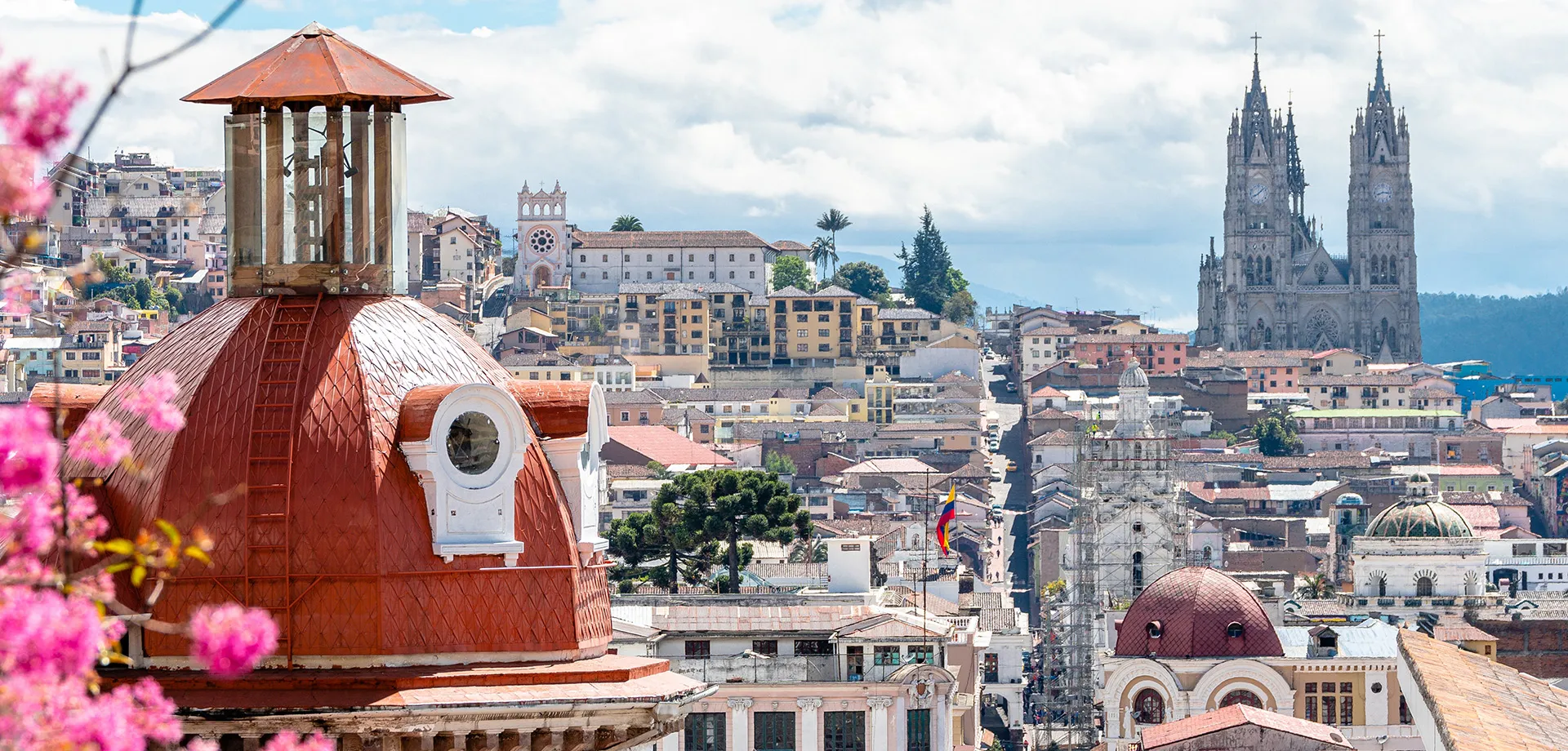
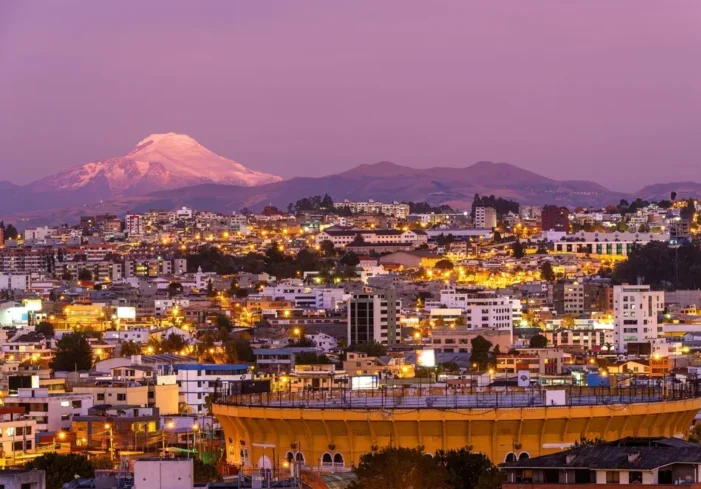
Quito is a city that challenges you to slow down – quite literally, as the altitude requires time to adjust. The atmosphere is a fascinating blend: in the morning, you hear the bells of colonial churches and see women in traditional clothing (cholas) selling fresh fruit, while in the evening, you discover modern bars and restaurants housed in restored mansions. Due to its location on the Equator, there are no significant seasonal changes, and the sunlight always falls vertically, giving the buildings and surrounding mountains a stunning, almost theatrical glow.
Quito
The Colonial Capital That Touches the Sky on the Slopes of the Andes
Quito, situated at an altitude of 2,850 meters on the slopes of the active Pichincha Volcano, is the second-highest capital in the world and undoubtedly one of the most impressive. It boasts the largest, oldest, and best-preserved historic center in the Americas, which was also the first to be designated a UNESCO World Heritage Site in 1978. Walking through its cobblestone streets, among gold-adorned churches, colorful colonial squares, and bustling markets, you can feel history coming to life. It is a jewel of a city in the Andes, combining the proud heritage of its indigenous people with the grandeur of Spanish architecture.
Highlights
Historic Center
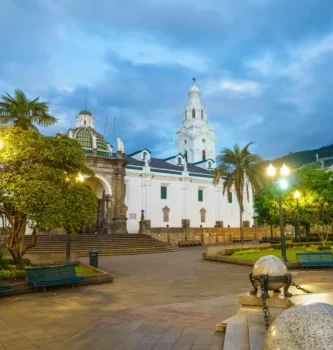
The heart of the city is an architectural treasure. Start at Plaza Grande (the main square) and visit the Church of La Compañía de Jesús, whose interior is entirely covered in gold leaf. Don't miss the imposing Basilica of the National Vow (Basílica del Voto Nacional), where the gargoyles are shaped like Galápagos animals (tortoises and iguanas).
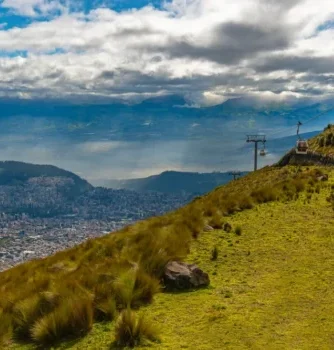
Cable Car
One of the highest cable car rides in the world, taking you from 3,117 to 3,945 meters on the slopes of Pichincha Volcano. The views of the entire city and the "Avenue of the Volcanoes" from up there are breathtaking. If you can handle the altitude, you can hike to the summit of Rucu Pichincha.
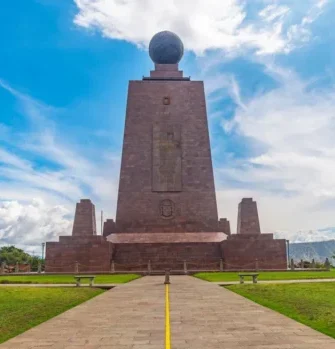
Mitad del Mundo Monument
Approximately 45 minutes north of the city stands the monument marking the imaginary line of the Equator (Latitude 0°0'0"). You can take the classic photo with one foot in the Northern Hemisphere and the other in the Southern Hemisphere. Right next door, the fascinating Museo Intiñan claims to mark the exact location of the Equator based on GPS measurements and offers fun physics experiments.
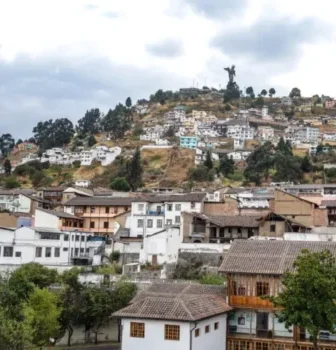
El Panecillo Hill
A natural hill shaped like a small loaf of bread (hence its name) that overlooks the city center. At its summit stands the enormous aluminum statue of the Virgin of Quito (Virgen de El Panecillo). It offers fantastic 360-degree panoramic views, although taking a taxi to the top is recommended for safety reasons.
Select your Travel type
Search destination
No trips were found matching your selection.
IDEAL DESTINATION
Altitude, Tradition, and Eternal Spring
A Culinary Journey Through Quito
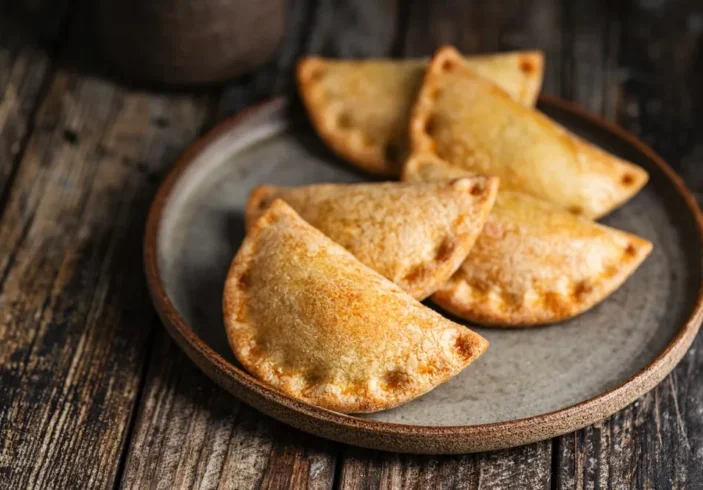
Andean cuisine is rich, hearty, and warming, relying heavily on potatoes and corn. Be sure to try Locro de Papa (the national soup made with local potatoes, cheese, and avocado – perfect for cold nights). Equally popular are Empanadas de Viento (large fried empanadas filled with cheese and sprinkled with sugar). To warm up, enjoy a glass of Canelazo, a hot drink made with water, cinnamon, sugar (panela), and local sugarcane liquor (aguardiente).
The Best Time to Visit Quito
Quito enjoys a climate of “eternal spring”. Temperatures remain relatively stable throughout the year, reaching 20–22°C during the day and dropping to 8–10°C at night. The best time to visit is during the dry season, from June to September, when days are sunny and skies are clear. From October to May, rainfall is frequent, usually in the form of heavy afternoon thunderstorms.
How to Get Around Quito

Transportation Options To and From the Airport
Mariscal Sucre International Airport (UIO) is located in the Tababela area, approximately 40–50 kilometers from the city center (the journey can take between 45 minutes and 1.5 hours, depending on traffic). The best transportation options are the official Aeroservicios bus, which operates services to the former Bicentenario station, or the airport’s official yellow taxis. You can also use Uber, although drivers often request that passengers meet them outside the arrivals area.

Public Transportation
Quito is a very long, narrow city, stretching from north to south. It has the Trolebús, Ecovía, and Metrobús systems, which operate in dedicated lanes (bus rapid transit) and are very inexpensive. However, they become extremely crowded during rush hours, and extra caution is needed to avoid pickpockets. In December 2023, the Quito Metro (Metro de Quito) was inaugurated. It is ultra-modern, fast, and safe, making getting around the city incredibly convenient. Uber remains an extremely affordable, widely used, and safe option (much better than hailing a taxi on the street, especially at night).
Questions/Answers
Q&A
Greek and Cypriot citizens do not need a visa for tourist stays of up to 90 days. Your passport must be valid for at least six months from the date of arrival.
As in most major cities in Latin America, caution is advised. The Historic Center and neighborhoods such as La Floresta and La Carolina are safe during the day. However, the streets become deserted quickly at night. Avoid walking alone after dark, use Uber to get around, and refrain from displaying expensive phones or jewelry.
At 2,850 meters, you are very likely to experience shortness of breath, fatigue, or a mild headache (known as soroche). Plan to take it very easy during your first two days. Drink plenty of water, avoid alcohol and heavy meals, and try coca leaf tea, which is offered at most hotels.
Due to the high altitude and unpredictable weather, the key is to dress in layers. You will need comfortable clothes for warm days, a waterproof jacket, and a warm sweater or coat for cold evenings. Comfortable sneakers, sunscreen (the sun is very strong at the Equator), and sunglasses are also essential.
Three full days are recommended. This is enough time to spend one day exploring the Historic Center, another visiting the Teleférico and Mitad del Mundo, and the third day adjusting to the altitude and exploring museums or local markets.