Bergen is a city that embodies the poetic soul of Norway—with its dramatic fjords, swirling mist, timeless music, art, and genuine warmth. It is an extraordinary destination inviting you to listen closely to the falling rain, wander among its heritage wooden homes, and feel the harmonies of Edvard Grieg. Discover the true heart of Norway and journey to enchanting Bergen.
Bergen
Where rain accompanies the fjords, colorful wooden houses, and the spirit of Norwegian tradition
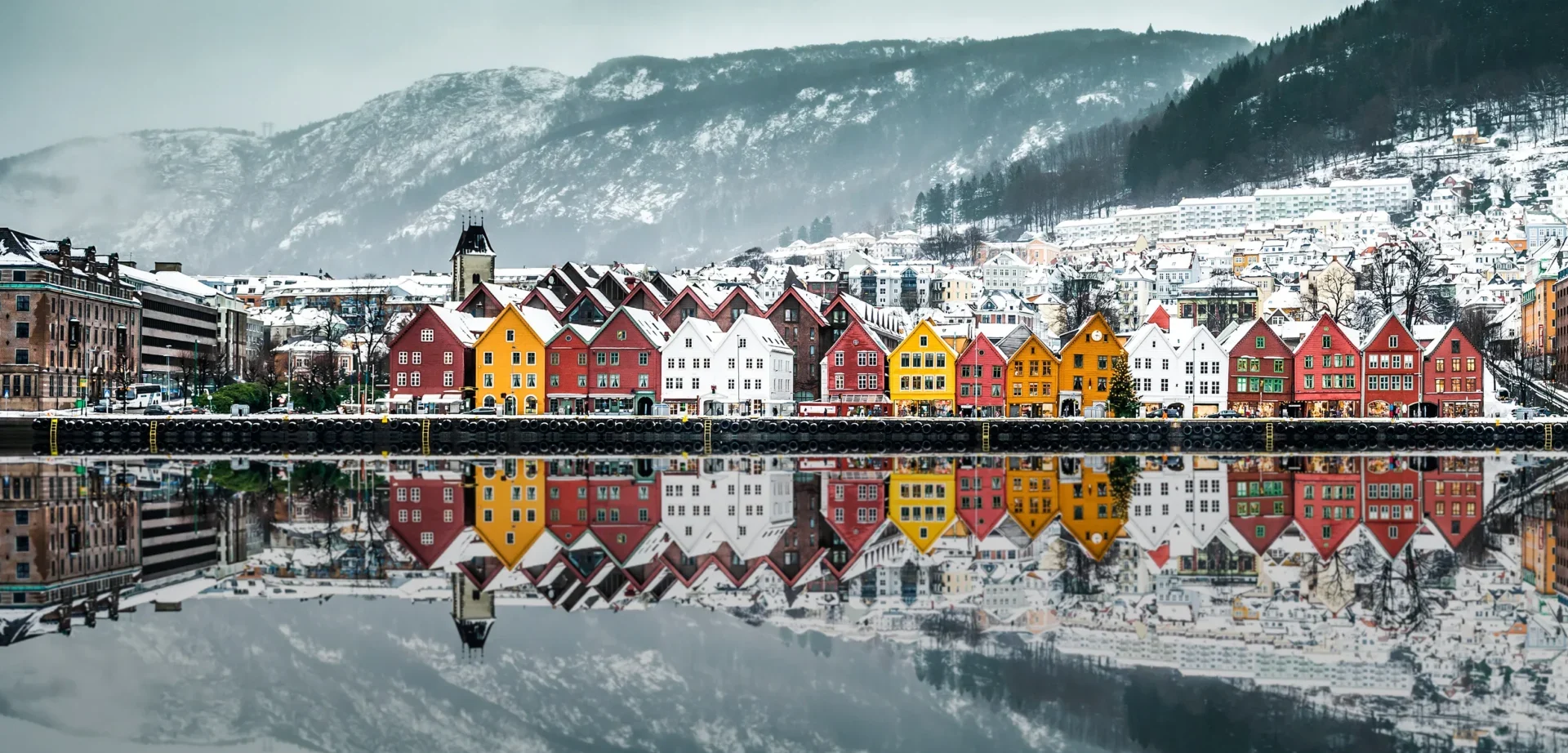
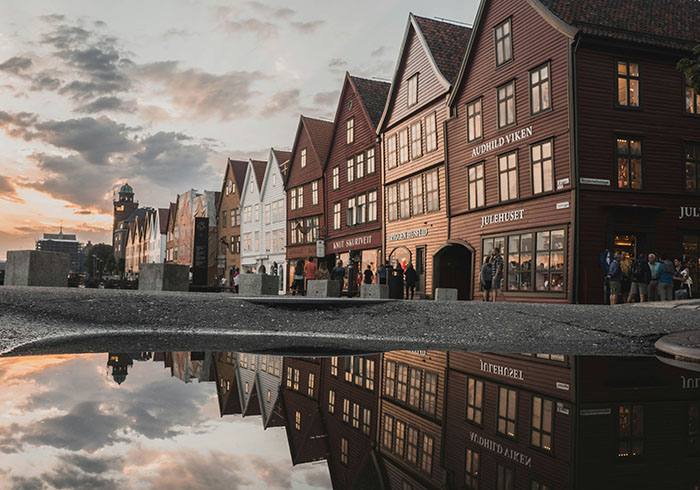
Bergen, nestled between dramatic mountains and fjords, is Norway’s second-largest city and the renowned “Gateway to the Fjords.” Its historic core is filled with traditional wooden architecture and narrow cobblestone alleyways. Bryggen, Bergen’s medieval wharf, is a recognized UNESCO World Heritage site.
The city is rich in culture and history, featuring attractions like the KODE Art Museums, the Edvard Grieg Museum (Troldhaugen)—dedicated to the famous Norwegian composer—the Norwegian Fisheries Museum, and various heritage centers. Bergen boasts a vibrant musical legacy and is famous for hosting the annual Bergen International Festival.
Visitors can explore world-famous fjords nearby, including the Sognefjord and the UNESCO-listed Nærøyfjord. For sweeping panoramic views, the Fløyen mountain (accessible via the Fløibanen funicular) is a must-visit. Bergen is also exceptionally family-friendly, offering top attractions like the Bergen Aquarium (Akvariet i Bergen), the VilVite Science Center, and endless outdoor activities.
Highlights

Cruise to the Fjords
Embark on a 3-hour round-trip cruise through the 27-kilometer-long Osterfjord. On this journey, you'll sail through Mostraumen, the fjord's narrowest point, where steep mountain walls tower overhead. Along the way, you'll encounter breathtaking scenery, cascading waterfalls rushing down the cliffs, and Norwegian nature in all its majestic glory.

At Bryggen*
Bergen's historic wharf district is truly picture-perfect and a UNESCO World Heritage Site. Its iconic, colorful wooden buildings originally served as trade warehouses for the Hanseatic League. First constructed in the 12th century, the wooden structures suffered extensive fire damage over the centuries and were rebuilt following the great fire of 1702, carefully preserving their medieval layout and charm.
A visit to the fish market
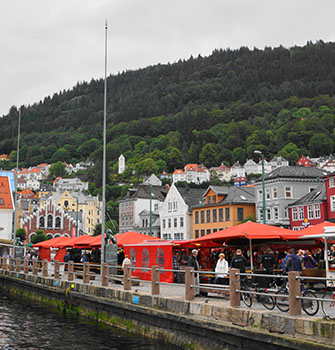
Located in the Torget area, Bergen's famous open-air Fish Market (*Fisketorget*) is a highlight of the city. Here, you'll find an impressive selection of fresh fish and shellfish laid out across market stalls, serving as the prime foundation of Norwegian seafood cuisine. It's the ultimate spot to pause for a quick, exceptionally fresh seafood lunch right by the harbor.

Climb to Ulriken
To see just how spectacular Bergen looks from above, take the Ulriken603 cable car up to Mount Ulriken, the highest of the city's peaks at 643 meters.Bergen is surrounded by seven iconic mountains, offering countless hiking and biking trails for adventure enthusiasts. The area is also home to serene lakes ideal for kayaking and coastal spots perfect for a refreshing swim in nature.
Select your Travel type
Search destination
No trips were found matching your selection.
IDEAL DESTINATION
Where nature becomes music and history lives in wooden alleyways
Gastronomic journey in Bergen
The culinary identity of Bergen is defined by the ocean and pristine freshness. The beating heart of its gastronomy is found at the Fisketorget Fish Market, where you can sample fresh salmon, shrimp, crab, herring, and even whale or reindeer meat served in various forms—ranging from quick street food to fine delicacies.
Traditional Bergen cuisine features signature dishes such as:
Fiskesuppe: A rich, creamy seafood soup loaded with vegetables and fresh fish.
Persetorsk: A classic local specialty of cod filet slowly cooked with salt, sugar, and butter.
Sild: Pickled herring served in various marinades or paired with dark rye bread.
Kjøttkaker: Hearty Norwegian meatballs served with brown gravy and boiled potatoes.
For fine dining enthusiasts, Bergen boasts world-class establishments like the Michelin-starred Lysverket and Bare Restaurant, where seasonal menus evolve dynamically around the region’s daily catch.
Sustainability is woven into the city’s food culture. A growing number of restaurants rely on organic produce, partner directly with local smallholders, and provide inventive options for vegetarian and vegan travelers.

Best time to visit Bergen
The ideal time to plan your trip is between March and October. During these months, temperatures are comfortable, and daylight hours stretch significantly longer, giving you plenty of sunshine to explore.
If you visit during the rest of the year (November to February), it’s perfect if you are a fan of snow, cozy Scandinavian vibes, and winter sports.
How to get around Bergen

Getting to/from the airport
Bergen Airport, Flesland, is located 21 km from the city center. Transfers between the airport and the city are easily made via express buses that run regular, frequent services to and from central Bergen.

Public Transport
Getting around Bergen is best done using its comprehensive public transportation network. Buses are the most versatile option, with routes covering nearly every corner of the city. Alternatively, you can travel using the Bybanen light rail system or trolleybuses. The city is also exceptionally welcoming to alternative modes of transport, such as cycling.
Questions / Answers
Q&A
It is the historic Hanseatic wharf district of Bergen, world-famous for its colorful wooden buildings, UNESCO World Heritage status, and rich commercial heritage.
It is definitely worth staying for 2–3 days to fully experience the city’s unique culture and take unforgettable day trips to the surrounding fjords.
By train (approx. 7 hours, offering one of the world’s most breathtaking scenic railway journeys) or by a quick direct flight (50 minutes).
Sognefjord (Norway’s largest and deepest fjord, featuring the dramatic Nærøyfjord arm) and Hardangerfjord (famous for its cascading waterfalls, scenic orchards, and fruit blossoms).
Yes, like most Scandinavian cities, but it delivers exceptional quality and stunning nature at every turn.
![City Break with food walking tour in Athens [4days]](https://mazitravel.com/wp-content/uploads/2026/01/Athens-AdobeStock_125876014-scaled-e1769512144460.jpeg "City Break with food walking tour in Athens [4days]")